



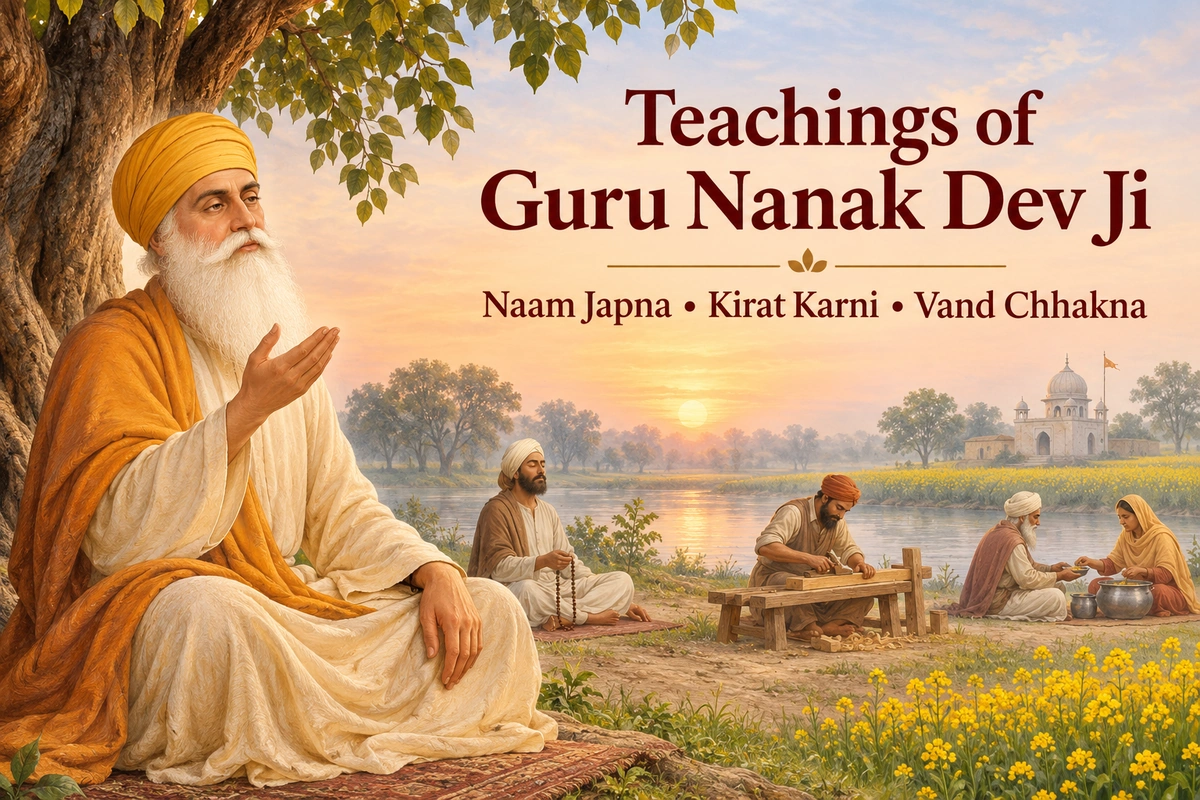
Guru Nanak Jayanti 2026 falls on Tuesday, 24 November, marking the 557th birth anniversary of Guru Nanak Dev Ji. His core teachings are Naam Japna (remembering God), Kirat Karni (honest work) and Vand Chhakna (sharing with others), along with equality for all, respect for women, controlling the five inner weaknesses and caring for nature.
Falling on Tuesday, November 24, 2026, on Kartik Purnima, Guru Nanak Jayanti (also called Gurpurab or Prakash Utsav) celebrates the 557th birth anniversary of Sri Guru Nanak Dev Ji, who is the founder of Sikhism and the first among the ten Gurus of Sikhism. Born in 1469 in Talwandi (now Nankana Sahib, Pakistan), Guru Nanak Dev Ji was born at a time when caste discrimination and the use of useless rituals were prevalent. From this point in time, he delivered a very simple message to the world for the goodness of mankind in the shape of kindness, humility, equality & devotion to one Supreme power.
And 500 years on, he still teaches us how to manage stress, create community, and find peace.
The Three Pillars of Guru Nanak Dev Ji’s Philosophy
Guru Nanak Dev Ji broke down spiritual wisdom into four simple habits that anyone – regardless of background, gender, or social status – can practice every day:
| Core Principle | Gurmukhi Term | What It Means in Daily Life |
|---|---|---|
| Remembering God | Naam Japna | Staying calm, mindful, and grateful by remembering God’s Name during everyday routines. |
| Honest Work | Kirat Karni | Earning a living through hard work, honesty, and fairness rather than cheating or depending on others. |
| Sharing with Others | Vand Chhakna | Sharing your food, earnings, and time with people in need—the core idea behind the Langar community meal. |
Looking for direction in your work and career? Get Your Personalised Career Astrology Report
Key Teachings of Guru Nanak Dev Ji for Everyday Life
Controlling The Five Inner Weaknesses
According to him, if one controls these 5 weaknesses, which are namely – Kaam (Uncontrolled Desire), Krodh (Anger), Lobh (Greed), Moh (Blind Attachment), Ahankar(Pride or Ego), then he can find peace.
Instead of going away from home life to stay alone somewhere in the forest as some others did, he told them to live like a lotus flower, which stays clean in muddy water. So, even though they have family responsibilities, they could take care of themselves and help those around them.
Equality for All and Respecting Women
And, during this time, people separated themselves according to caste and gender. But in Guru Nanak Dev Ji’s eyes, everyone was the same, whether a king or a worker. Everyone should pray together (Sangat) & sit together in a line & have food (Pangat). ‘So Kyon Manda Aakhiye’ is his famous verse, meaning everyone should respect women because every king, politician & intelligent soul was born out of a woman.
Value of Truthful Living Over Rituals
During his extensive journeys (Udasis) through South Asia, Tibet, and the Middle East, Guru Nanak showed the importance of being truly generous and just, in comparison to being superficial. Once, he rejected a sumptuous meal offered by a greedy officer, Malik Bhago, and instead ate the meal of an honest carpenter, Bhai Lalo. The line here to keep in mind: “The greatest virtue is truthfulness and highest of all virtues is honest living.”
Giving up your ego and accepting God’s will (Hukam)
In the opening prayer (Japji Sahib) of Guru Granth Sahib, Guru Nanak says that most of our problems are caused by Haumai (selfish ego). If we give up our ego, accept nature’s way (Hukam), and do Seva (Selfless service without desiring praise), then fear is replaced with strong peace and gratitude.
Protection of Nature & Earth
Long before the modern awareness of the environment, Guru Nanak Dev Ji taught us to respect nature as creation of God. In the last few lines of Japji Sahib, he compared air as teacher, water as father & earth as Mother (Pavan Guru Pani Pita Mata Dharat Mahat), so that we take care of our planet for future generations.
How Guru Nanak Jayanti 2026 Is Celebrated
- Akhand Path: Reading the Sri Guru Granth Sahib day and night for 48 hours straight is a marathon of love, finished off with your most heartfelt Ardas prayers for the entire world to find peace in.
- Nagar Kirtan: On the day before Gurpurab, the streets are filled with color as the Panj Pyare walk out in procession, performing fantastic Shabad Kirtan and Gatka (martial arts).
- Amrit Vela & Langar: Before the sun has risen, people are already at the Gurudwara for early morning prayer – Asa Di Var, a beautiful service – and then the best part: a free vegetarian meal – Langar – where anyone and everyone is equal.
- Lighting Lamps (Deepmala): At night, homes & Gurudwaras are illuminated with flowers, oil lamps & candles to showcase that the light of wisdom can remove ignorance.
Have a question about your life path or the months ahead? Talk to an Astrologer – First Chat Free!
Conclusion: Carrying Guru Nanak Dev Ji’s Light Into Daily Life
Guru Nanak Dev Ji’s teachings are not just for special prayers on Kartik Purnima; they are for the work we do every day, the words we speak every day, and the way we treat others every day. When we work with integrity, keep a humble heart, and give to others without ego, we embrace the true spirit of Guru Nanak Jayanti and live out his message of peace, kindness, and love every day of the year. For other festivals this season, see the GaneshaSpeaks festival calendar.
FAQs
What are the three pillars of Guru Nanak Dev Ji’s philosophy?
The three pillars of Guru Nanak Dev Ji’s philosophy are Naam Japna (meditating on God’s name), Kirat Karni (honest living), and Vand Chhakna (sharing with others).
How does Guru Nanak Dev Ji suggest we control our inner weaknesses?
Guru Nanak Dev Ji advises controlling the five inner weaknesses: Kaam (uncontrolled desire), Krodh (anger), Lobh (greed), Moh (blind attachment), and Ahankar (pride or ego) to achieve peace.
What is the significance of equality in Guru Nanak Dev Ji’s teachings?
Guru Nanak Dev Ji emphasized equality for all, regardless of caste or gender, and advocated for respecting women, as everyone should pray and eat together, reflecting the belief that all humans are equal.
How did Guru Nanak Dev Ji view the importance of nature?
Guru Nanak Dev Ji taught the importance of respecting nature, viewing air as the teacher, water as the father, and earth as the mother, emphasizing the need to care for the planet for future generations.
What lesson does the story of Bhai Lalo and Malik Bhago teach?
The story of Bhai Lalo and Malik Bhago illustrates the virtue of honest living over superficial generosity, as Guru Nanak Dev Ji chose to eat a simple meal prepared by the honest carpenter, Bhai Lalo, over a lavish feast offered by the greedy officer, Malik Bhago.