



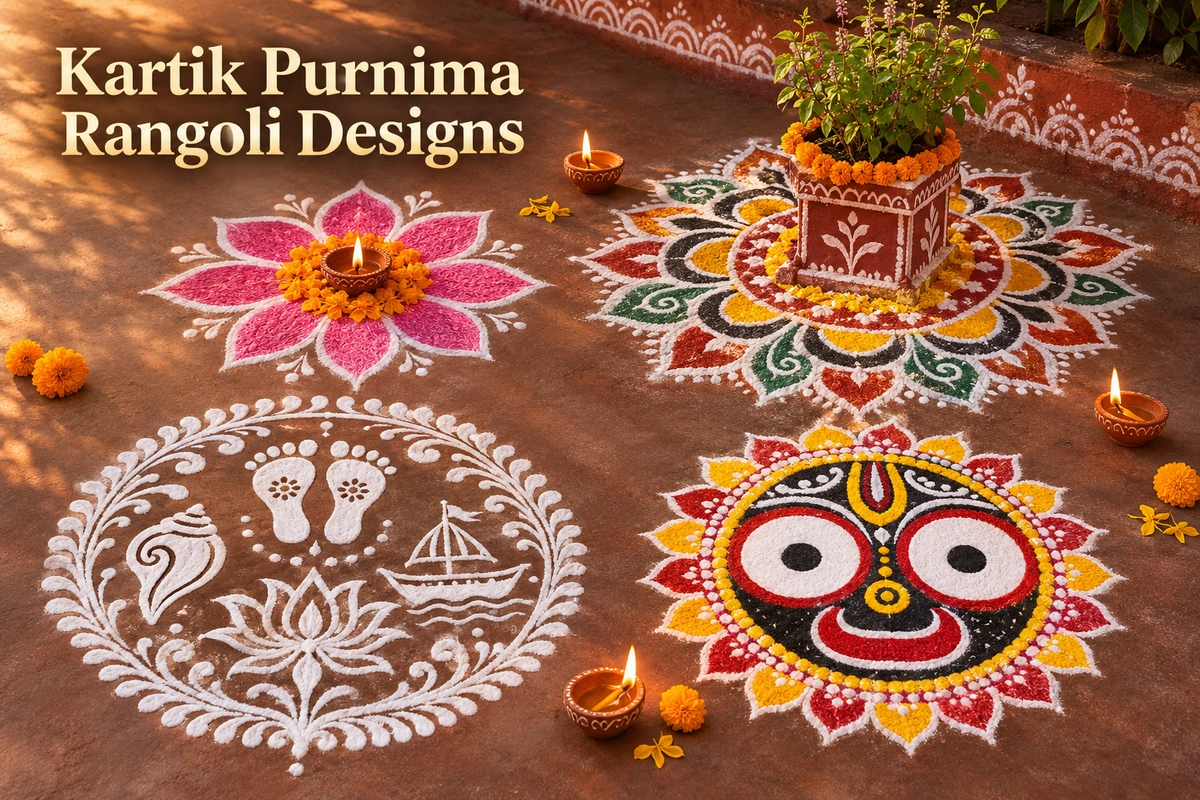
For Kartik Purnima on Tuesday, 24 November 2026, popular rangoli designs include a simple eight-petal lotus with a diya, Odisha’s Jhoti Chita made from rice paste (pithau) with Lakshmi footprints and boat motifs, Muruja five-colour powder art around the Tulsi chaura, and Lord Jagannath face and chariot-wheel designs.
On Tuesday, November 24, 2026, the festival of Kartik Purnima will be celebrated – it is one of the brightest full moons in the Hindu calendar and also the last day of the pious Kartik month. The festival falls on the occasion of Dev Deepavali, Guru Nanak Jayanti, or Boita Bandana in Odisha.
Among the many ways to celebrate this auspicious day, people often opt for making traditional art on the floor in the morning. Here are the various types of floor designs that are made for Kartik Purnima this time.
1. Simple Kartik Purnima Rangoli Designs
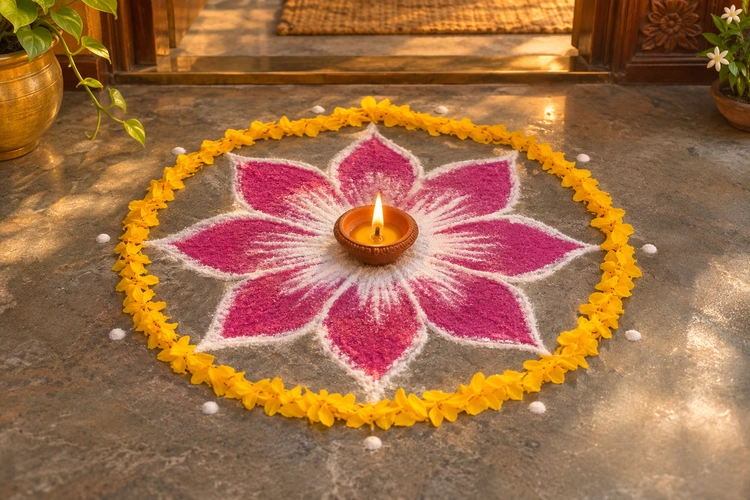
If time is short before morning prayers or evening Deepdan (lamp lighting), just a few basic geometric and floral motifs will bring instant festiveness and a glow:
- In the middle, draw a lotus with eight petals with pink and white rangoli powder and surround it with a ring of yellow marigold petals. Keep an earthen clay Diya in the middle to represent purity and spirituality.
- Ideal for a cramped apartment threshold, this tiny pattern has the holy kalash overhead with coconut and mango leaves and, on either side, two little swastikas with a ring of haldi and kumkum.
- Surround the Tulsi located in your courtyard with a complete circular edge that has the design of mango leaves within and little mud lamps which are used in the evening for doing Aarti.
2. Traditional Jhoti Chita Rangoli from Odisha
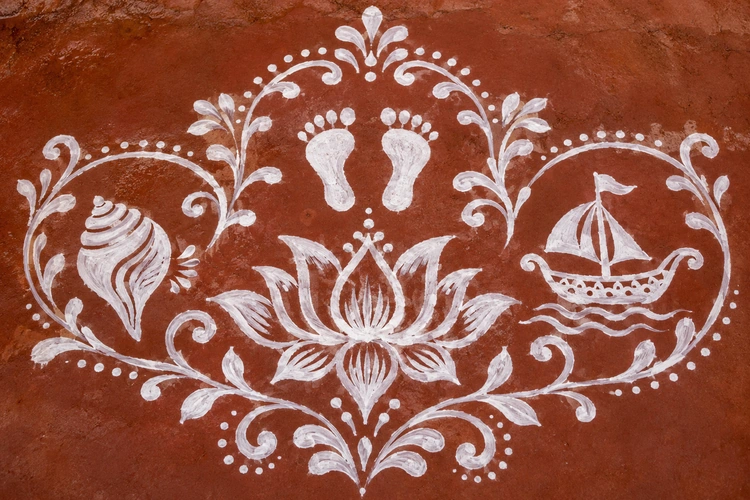
In Odisha, Kartik Purnima is closely associated with maritime culture and temple rituals. On this day, women make beautiful designs using Jhoti Chita, which is an ancient form of white paint:
- How Jhoti is created: Unlike dried powder Rangoli art, Jhoti art is made using the paste of Pithau, which is created using soaked and ground rice mixed with water. The artist then uses fingers or cloth to create patterns.
- What is represented by the design: Traditional designs include rows of Goddess Lakshmi’s footprints, known as Lakshmi Pada, leading into the prayer room, along with lotus flowers, conch shells and boat motifs called Boita. Lakshmi Pada is also drawn during Lakshmi Puja to welcome the goddess into the home.
3. Sacred Muruja Rangoli (Panchavarna Powder Art)
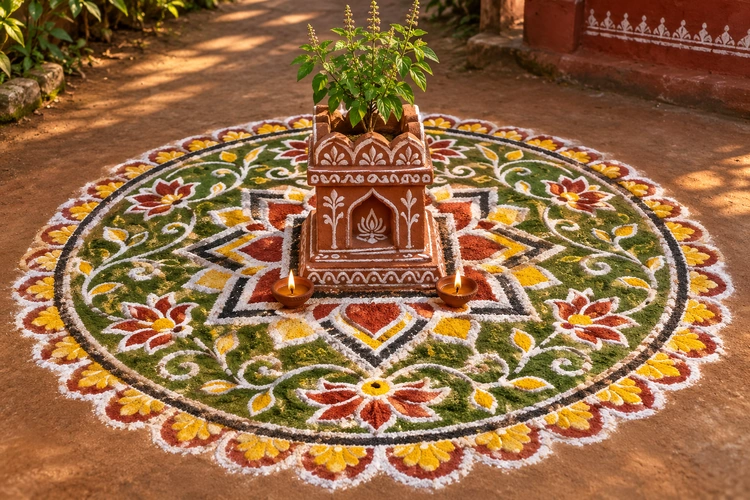
Connected to the Habisha rituals by the devotees during Karthik in Puri and elsewhere in Odisha, Muruja is a holy dry-powder design around the Tulsi (Chaura):
| Traditional Color | Natural Source Used in Muruja | Spiritual Meaning |
|---|---|---|
| White | Crushed white limestone or rice powder | Purity, peace, and sattvic devotion |
| Yellow | Sun-dried turmeric powder (Haldi) | Auspiciousness and divine light |
| Red | Brick dust or natural vermilion (Sindoor) | Shakti, energy, and sacred marriage |
| Green | Dried and powdered neem or bael leaves | Nature, healing, and renewal |
| Black | Burnt coconut shell charcoal powder | Protection from negative energies |
Drawing Muruja: Draw elaborate geometric mandalas, temple towers, and floral vines encircling the Tulsi Chaura with the five natural powders – Panchavarna – between thumb and forefinger before morning puja.
Want to know which colours and planets are strongest in your own birth chart? Get Your Personalised Birthday Horoscope Report
4. Lord Jagannath Rangoli Designs for Kartik Purnima
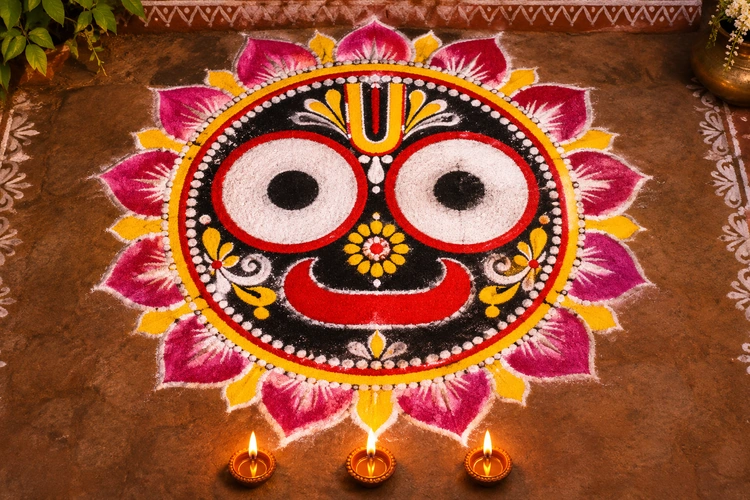
Ruled by the celestial powers, Kartik Purnima has achieved significance in Shree Jagannath Temple in Puri on account of the divine appearance of deities in the brilliant form of Rajarajeswara Besha (Suna Besha). Devotees enjoy making the Lord Jagannath rangoli at home as a way to seek His blessings:
- Simple Jagannath Face Design: Bold circles of colors black, white, yellow, and red can be used to create the round eyes and wide smiling face, with crescent-shaped petals acting as a border.
- Trinity (Chaturdha Murti) motif: Place stylized faces of Lord Jagannath, Lord Balabhadra, and Devi Subhadra in the same row using bright colors. Three clay lamps should be used below them during sunset.
- Nandighosha chariot wheel motif: Create a traditional sixteen-spoked temple wheel from red and yellow powders to signify the unending march of dharma and good fortune.
Quick Tips to Make Your Rangoli Last Longer
- Ensure your entrance floor is clean and dry before application so that the powder doesn’t clump up.
- Use stencils or a sieve to create a plain background; lightly scatter the background colour uniformly with a small tea strainer and then create designs with a rangoli pen/ cone made from paper.
- Bringing fresh petals and using dry ingredients along with the marigold blooms and burning brass/ clay lamps lends a certain richness, smell, and the glow of oil lamps during night time.
Conclusion
The beautiful floor decoration in the homes is a tribute to the Earth, expressing patience and thankfulness. On Kartik Purnima 2026, the tradition was continued by drawing Jhoti made of rice paste, holding natural Muruja on the pot of Tulsi, and also drawing colorful strokes of Lord Jagannath’s face.
Being transitory in nature, the art of rangoli compels us to live in the moment. Rangoli is made with love. A lamp is lit, and we invite the people and the divine to come with open hearts.
Have a question about your home, your family or the months ahead? Talk to an Astrologer – First Chat Free!
FAQs
What are the popular Kartik Purnima Rangoli designs for 2026?
Popular Kartik Purnima Rangoli designs for 2026 include a simple eight-petal lotus with a diya, Odisha’s Jhoti Chita with Lakshmi footprints and boat motifs, Muruja five-colour powder art around the Tulsi chaura, and Lord Jagannath face and chariot-wheel designs.
When is Kartik Purnima celebrated in 2026?
Kartik Purnima is celebrated on Tuesday, November 24, 2026. It marks one of the brightest full moons in the Hindu calendar and is the last day of the pious Kartik month.
What is Jhoti Chita and how is it used during Kartik Purnima?
Jhoti Chita is an ancient form of white paint art used in Odisha. During Kartik Purnima, women create beautiful designs using rice paste, featuring Lakshmi footprints and boat motifs, to celebrate the festival.
What is the significance of Muruja during Kartik Purnima?
Muruja is a holy dry-powder design created around the Tulsi Chaura using five natural powders. It is connected to the Habisha rituals and is an important part of Kartik Purnima celebrations in Odisha.
How is Lord Jagannath represented in Kartik Purnima Rangoli?
During Kartik Purnima, devotees create Rangoli designs featuring Lord Jagannath’s face and chariot-wheel motifs. This art form is a way to seek blessings and express devotion to the deities.