


Dwadashamsa Chart Calculation – D12 Chart Analysis for Parents
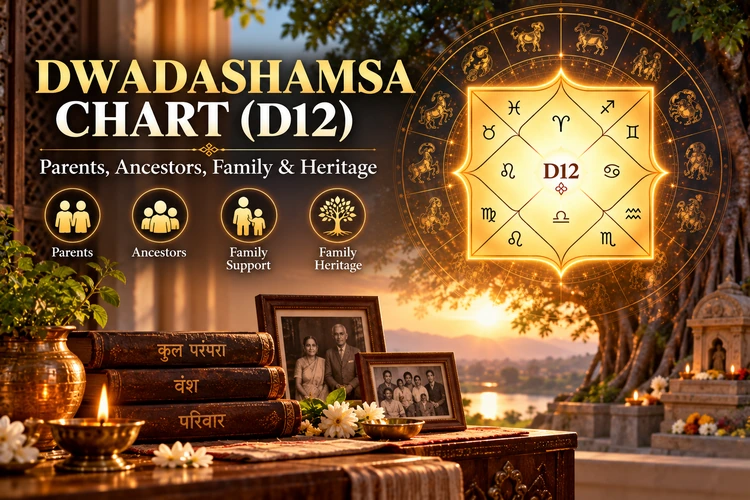
The Dwadashamsa Chart (D12) is an important divisional chart in Vedic astrology used to analyse parents, ancestors, family heritage and the influence of one’s lineage. While the birth chart (D1) provides the overall picture of life, the D12 chart gives deeper insight into parental relationships, family background and the inherited patterns that may influence a person’s life.
The D12 chart is particularly useful for understanding one’s relationship with parents, their support, well-being and the influence of ancestral karma. Astrologers generally study it alongside the D1 chart, especially the 4th and 9th houses, their lords and relevant planetary dashas and transits.
What is the Dwadashamsa Chart (D12) in Astrology?
The word Dwadashamsa comes from the Sanskrit terms Dwadasha, meaning ‘twelve’, and Amsa, meaning ‘division’. The D12 is the twelfth divisional chart in Vedic astrology and is mainly associated with parents, ancestors, family lineage and inherited qualities.
The Dwadashamsa chart helps astrologers understand:
- Relationship with parents
- Parental support and influence
- Family heritage and lineage
- Ancestral patterns
- Qualities inherited from parents
- Connection with ancestors
- Parental well-being
- Family traditions and values
How is the Dwadashamsa Chart Calculated?
Each zodiac sign consists of 30 degrees and is divided into twelve equal parts to create the Dwadashamsa chart.
Calculation Method
- Every zodiac sign spans 30 degrees.
- Each sign is divided into 12 equal parts.
- Each Dwadashamsa measures 2°30′.
Example
- 0°00’–2°30′ = First Dwadashamsa
- 2°30’–5°00′ = Second Dwadashamsa
- 5°00’–7°30′ = Third Dwadashamsa
- 7°30’–10°00′ = Fourth Dwadashamsa
The remaining divisions continue in the same sequence until 30 degrees. The D12 sign is assigned according to the specific divisional calculation rules used in Vedic astrology. Since even a small difference in birth time can affect divisional charts, astrologers generally use accurate birth details and astrology software to prepare the D12 chart.
How to Read & Analyze the Dwadashamsa Chart
The D12 chart should be interpreted alongside the birth chart rather than independently. The 4th and 9th houses, their lords and relevant planets in the D1 chart remain important when analysing parents and family lineage.
D12 Ascendant (Dwadashamsa Lagna)
The D12 Lagna provides insight into family heritage, inherited qualities and the way parental influences may shape a person’s personality and life. Its strength and the condition of the D12 Lagna lord are considered when assessing one’s connection with family and ancestry.
4th House and 4th Lord
The fourth house is traditionally associated with the mother, home, emotional security and nurturing influences. Its condition in the D1 and D12 charts can provide insight into the relationship with the mother and the influence of the maternal side of the family.
9th House and 9th Lord
The ninth house is associated with the father, blessings, traditions, teachers and ancestral guidance. The condition of the ninth house and its lord can provide additional insight into the relationship with the father and paternal lineage.
Sun and Moon
The Sun is traditionally associated with the father, authority and paternal lineage, while the Moon is associated with the mother, emotional connection and nurturing. Their strength and placement are therefore important factors in D12 analysis.
Planetary Strength
The D12 chart helps astrologers examine whether parental and ancestral indications seen in the birth chart are reinforced. Strong planetary placements may support parental guidance and family support, while challenging influences may indicate responsibilities, distance or difficulties in these relationships.
Dasha and Transit
Important events involving parents or family circumstances are generally judged by combining the D12 chart with Vimshottari Dasha, Antardasha, planetary transits (Gochar), the relevant houses and the birth chart. The D12 chart alone is not used to determine the timing of specific events.
Significance of Houses in the D12 Chart
1st House
Family identity, inherited qualities, parental influence and connection with one’s lineage.
2nd House
Family values, traditions, speech, inherited resources and the cultural environment of the family.
3rd House
Communication with relatives, siblings, family initiatives and efforts to maintain family connections.
4th House
Mother, home environment, emotional security, nurturing and maternal family influences.
5th House
Family traditions, inherited intelligence, values, creativity and patterns passed through generations.
6th House
Family responsibilities, conflicts, health-related concerns and challenges involving relatives.
7th House
Family relationships through marriage, partnerships and the influence of a spouse’s family.
8th House
Ancestry, inheritance, hidden family patterns, longevity and transformations within the family lineage.
9th House
Father, ancestral blessings, traditions, beliefs, guidance and paternal lineage.
10th House
Parental status, responsibilities, family reputation and the influence of parents on one’s public life.
11th House
Support from family, gains through relatives, fulfilment of family aspirations and elder relatives.
12th House
Separation, distance from family, foreign residence, expenses and withdrawal from traditional family patterns.
Important Planets in the D12 Chart
Sun in D12
The Sun is an important significator of the father and paternal lineage. Its placement can provide insight into the relationship with the father, authority within the family and inherited qualities from the paternal side.
Moon in D12
The Moon represents the mother, emotional bonding, nurturing and the sense of belonging within the family. Its condition can influence emotional connection with the mother and maternal lineage.
Mars in D12
Mars represents courage, energy, assertiveness and inherited patterns related to action. Its influence may also indicate conflict or strong personalities within the family.
Mercury in D12
Mercury influences communication, intelligence, learning and family interactions. Its placement can provide insight into communication with parents and the transmission of knowledge and skills through generations.
Jupiter in D12
Jupiter represents wisdom, blessings, guidance, values and traditions. Its influence may indicate support from parents, teachers or elders and a strong connection with family principles.
Venus in D12
Venus represents affection, harmony, relationships and comforts within the family. Its influence can support cordial parental relationships and appreciation of family traditions.
Saturn in D12
Saturn represents responsibility, discipline, duty and ancestral patterns. It may indicate responsibilities towards parents or a serious approach to family obligations, while also highlighting lessons passed through generations.
Rahu and Ketu in D12
Rahu may indicate unusual family circumstances, breaks from traditions or foreign influences within the family lineage. Ketu may indicate detachment from family patterns, spiritual tendencies or a less conventional connection with one’s ancestry.
How the Dwadashamsa Chart Helps in Family & Parent Prediction
The D12 chart provides additional insight into parental relationships and family lineage beyond what is visible from the birth chart. It can help astrologers examine:
- Relationship with the mother
- Relationship with the father
- Parental support and guidance
- Family heritage and traditions
- Ancestral influences
- Inherited qualities and patterns
- Responsibilities towards parents
- Connection with one’s lineage
A favourable D12 chart, supported by strong indications in the D1 chart and suitable planetary dashas and transits, may strengthen parental support and harmonious family relationships.
Other Important Factors in the D12 Chart
A complete Dwadashamsa analysis includes several factors beyond the D12 Lagna and the fourth and ninth houses.
These include:
- D12 Lagna and Lagna lord
- 4th house and 4th lord
- 9th house and 9th lord
- Sun and Moon
- Strength and dignity of planets
- Benefic and malefic aspects
- Parental and ancestral indicators
- Relevant planetary yogas
- Vimshottari Dasha and Antardasha
- Relevant planetary transits
Studying the D1 and D12 charts together provides a more complete picture of parental relationships, family heritage, ancestral influences and the values inherited through one’s lineage.
Conclusion
According to Vedic astrology, the Dwadashamsa Chart (D12) is a crucial chart in getting details about the parents, ancestral influence, family tradition etc. The D12 chart provides additional information on getting parental relationships and influence over ancestries which cannot be derived from the birth chart alone.
D12 chart also needs to be understood alongside D1 chart especially in relation to fourth and ninth houses and planetary dashas and relevant transits.
This combined approach can provide a more meaningful understanding of parental support, family relationships and ancestral influences.
Get Your Personalized Dwadashamsa (D12) Chart Analysis
Do you want to understand your relationship with your parents, family heritage or ancestral influences? A professional Vedic astrologer can analyse your Dwadashamsa (D12) chart along with your birth chart, planetary dashas and transits to provide personalised guidance on parental relationships, family patterns and lineage.
FAQs
What is the Dwadashamsa Chart (D12) in Astrology?
The Dwadashamsa Chart (D12) is an important divisional chart in Vedic astrology used to analyze parents, ancestors, family heritage, and the influence of one’s lineage. It provides deeper insight into parental relationships, family background, and inherited patterns that may influence a person’s life.
How is the Dwadashamsa Chart calculated?
Each zodiac sign consists of 30 degrees and is divided into twelve equal parts to create the Dwadashamsa chart. The D12 sign is assigned according to specific divisional calculation rules used in Vedic astrology, requiring accurate birth details and astrology software for preparation.
What role do the 4th and 9th houses play in the D12 chart?
The 4th house in the D12 chart is associated with the mother, home, and emotional security, while the 9th house relates to the father, traditions, and ancestral guidance. Their conditions provide insights into relationships with parents and the influence of maternal and paternal lineages.
Why is the Dwadashamsa Chart important in Vedic astrology?
The Dwadashamsa Chart is crucial for understanding one’s relationship with parents, their support, well-being, and the influence of ancestral karma. It helps astrologers examine whether parental and ancestral indications seen in the birth chart are reinforced.
How does the Dwadashamsa Chart relate to the Sun and Moon?
In the Dwadashamsa Chart, the Sun is associated with the father, authority, and paternal lineage, while the Moon is linked to the mother, emotional connection, and nurturing. Their strength and placement are significant factors in D12 analysis.