








Shukla paksha navmi
Tue, 20 Oct 2026October
2083 raudra, 1947 krodhi (Mumbai)
 Sunrise
06:33
 Sunset
18:13
 Sunrise
 Sunset
 Tithi
 Yoga Weekday Yamaghanta
 Paksha
 Nakshatra Karana
 Moonsign Rahu Kaal

Share Your Problem, Get Solutions At 50% OFF!
Ask an Expert

 Free Chat




 Free Horoscope Predictions
 Free 2027 Annual Report
 Free Kundli Matching
 Free Name Comp Report
 2026 Career Predictions
 2026 Love Predictions
 2026 Finance Horoscope
 Free Shani Dosha
 2026 Marriage Horoscope
 Upcoming Transit
View more

Navjot Singh Sidhu Horoscope 2026: Will He Return to Politics?
From smashing huge sixes in cricket to making millions of people laugh with his quick wit and humour, Navjot Singh…
The Power of Nine: Why Navratri Is Celebrated for Nine Nights
Nine nights of worship, nine forms of Maa Durga, and a festival that concludes with a celebration of victory. The…
What’s Your Garba Style? Navratri 2026 by Zodiac Sign
Have you ever wondered how differently people behave at Garba celebrations? One of your friends can hardly wait for the…
Vastu Tips For Navratri To Invoke Prosperity In Home
Navratri brings a special sense of devotion to the house. We clean our puja ghar, offer our prayers, welcome the…
2nd Day of Navratri: Maa Brahmacharini Puja Vidhi, Mantra, Colour and Significance
Maa Brahmacharini is worshipped as the second form of Goddess Durga during Navratri. She represents penance, devotion, discipline and spiritual…
Significance of Growing Navratri Jware Wheatgrass Vidhi
Each activity during Navratri has a meaning behind it, which is not obvious. Putting the Akhand Jyot on, setting up…
Which Colour Should You Wear Every Day? Vedic Astrology Reveals Your Lucky Colours
Do you sometimes wake up feeling a little blue on a particular day? Are there some days when you just…
Naamkaran Sanskar: How Vedic Baby Names Influence Personality & Destiny
What Is Naamkaran? A baby’s name is not just a word. It becomes their identity, vibration, energy and emotional signature…
 Shubh Muhurats
HINDU FESTIVALS
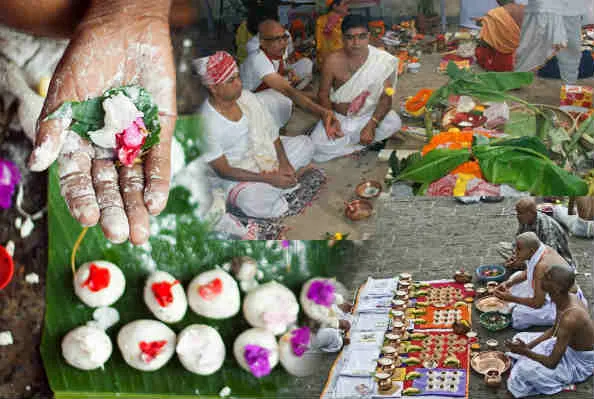
A festival is a time to celebrate religious events which are mostly told in mythological stories. But festivals can also be related to seasons, anniversaries or other significant historical events. Hindu festivals have their dates defined as per the Vedic calender, which is based on the planetary positions. Hindu festivals are as myriad as Hindu deities. In ancient times, almost every day of the year had some minor or major festival. But with increasing poverty and hectic modern times, now just a handful of major festivals are celebrated.
The major festivals are observed to celebrate the victory of good over evil, or the birth of a deity, or the beginning of the harvest season, etc. On the day of the festival, people worship the appropriate deity, observe fast or organize a feast, conduct havans, donate money to the poor or holy people, etc. For example, the festival of lights, Diwali, is observed to celebrate the victory of Lord Rama over the demon king Ravana. On the other hand, Holi is observed by different sects for different reasons ranging from celebrating the victory of good over evil, the arrival of spring, the ending of winter, a day to forgive and forget, repair broken relationships, etc. Raksha Bandhan is another major Hindu festival which celebrates the bond between brother and sister.
Likewise, every festival has a myth behind it, outlining the rituals that are to be carried out and the manner in which the event has to be celebrated, such as playing with colors or bursting of fire-crackers.
