



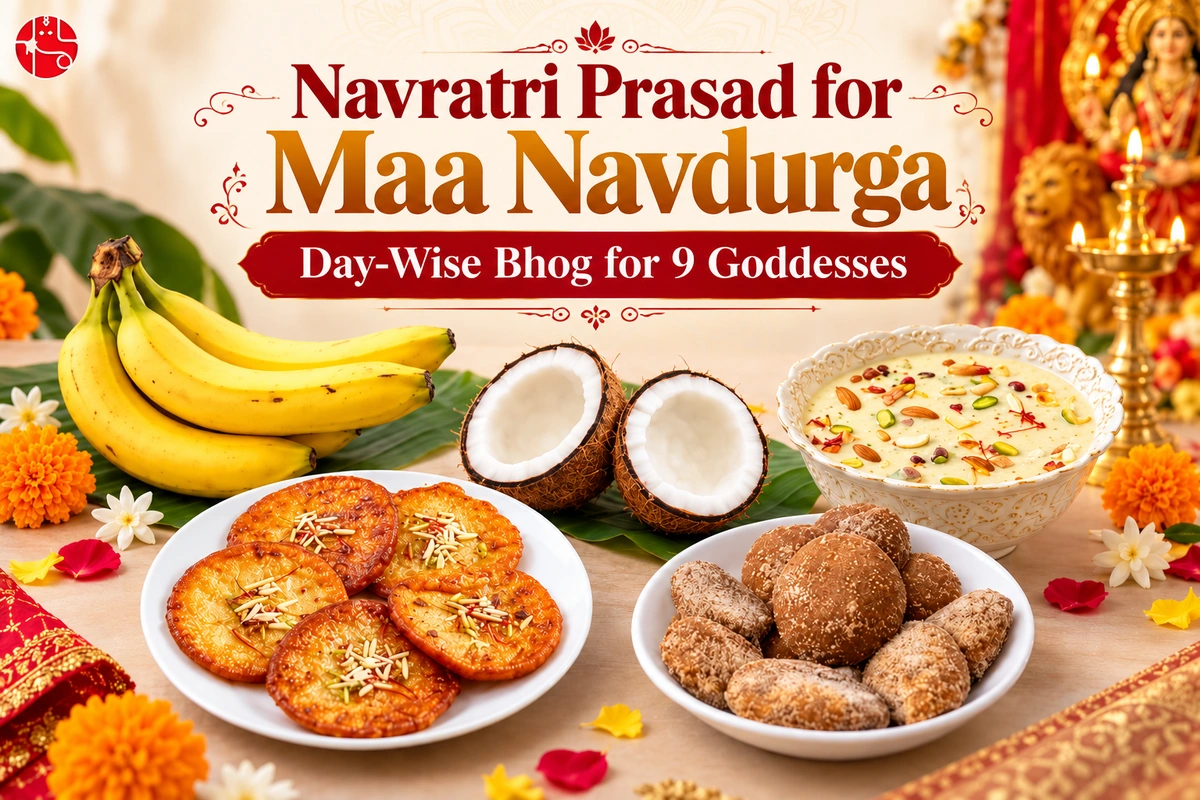
During Shardiya Navratri (11–20 October 2026), each Goddess receives a traditional bhog, such as milk-based sweets for Maa Chandraghanta (13 October), Malpua for Maa Kushmanda (14 October), banana for Maa Skandamata (15 October) and honey for Maa Katyayani (16 October). Prasad is prepared the Satvik way, without onion or garlic.
During Navratri, prayers, fasting, and devotion to Maa Durga resound in your homes and temples. It is a nine-day celebration dedicated to her nine divine incarnations collectively called Navdurga. As a part of this tribute, Bhog or Prasad is offered to the Goddess.
Every form of Navdurga is associated with a traditional food offering.
Why Is Prasad Offered During Navratri Puja?
In Hindu belief, Bhog is the food that is offered to the deity before it is received as Prasad. It is not offered out of obligation but as an act of love, faith, and devotion.
Sharad Navratri begins on Pratipada of the Shukla Paksha in the Hindu month of Ashwin and ends on Navami. Fasting is done, Puja is performed and offerings are made to the Goddess, worshiped on each day.
Shardiya Navratri 2026 Calendar: Dates, Goddesses and Colours
| Day | Date | Tithi | Goddess | Colour |
|---|---|---|---|---|
| Day 1 | Sunday, 11 Oct 2026 | Pratipada (Ghatasthapana) | Maa Shailputri | Orange |
| Day 2 | Monday, 12 Oct 2026 | Dwitiya | Maa Brahmacharini | White |
| Day 3 | Tuesday, 13 Oct 2026 | Tritiya | Maa Chandraghanta | Red |
| Day 4 | Wednesday, 14 Oct 2026 | Chaturthi | Maa Kushmanda | Royal Blue |
| Day 5 | Thursday, 15 Oct 2026 | Panchami | Maa Skandamata | Yellow |
| Day 6 | Friday, 16 Oct 2026 | Shashthi | Maa Katyayani | Green |
| Day 7 | Saturday, 17 Oct 2026 | Saptami (Maha Saptami) | Maa Kaalratri | Grey |
| – | Sunday, 18 Oct 2026 | Saptami continues; Ashtami begins 08:29 AM | – | – |
| Day 8 | Monday, 19 Oct 2026 | Ashtami (Durga Ashtami) | Maa Mahagauri | Purple |
| Day 9 | Tuesday, 20 Oct 2026 | Navami (Maha Navami) | Maa Siddhidatri | Peacock Green |
| Dussehra | Tuesday, 20 Oct 2026 | Dashami begins 12:51 PM | Vijayadashami | – |
Issue or Problems in Your Life? Click Here and Get First Free Online Astrologer Chat at GaneshaSpeaks
Which Prasad Should You Offer on Each Day of Navratri?
Day 1 – Maa Shailaputri: Pure Ghee
Navratri starts with Maa Shailaputri. On the first day, devotees worship Maa Shailaputri, the first form of Navdurga, who is associated with the Himalayan mountains.
On Pratipada, pure Ghee is offered to the Goddess at her feet. This offering, along with fasting, is said to bring good health and protection from diseases.
Day 2 – Maa Brahmacharini: Sugar
Day two honors Goddess Brahmacharini, who embodies intense devotion and sacrifice and represents Maa Durga’s penance in order to attain Lord Shiva as her husband.
On this day, sugar is offered as Bhog. It is said that if Maa Brahmacharini is worshipped and the fast is kept, it can bring blessings of longevity to family members.
Day 3 – Maa Chandraghanta: Milk and Milk-Based Sweets
Tritiya is dedicated to Maa Chandraghanta, and she gets this name as she bears a half-moon shape on her forehead.
Milk or any sweet that is made from milk, such as the customary milk-based sweets, is offered. These offerings are given in prayer for happiness and for emotional solace and relief from the pain of the world.
Day 4 – Maa Kushmanda: Malpua
On Chaturthi, devotees worship Maa Kushmanda, who is believed to be the creator of the universe.
Malpua is an Indian sweet that is offered to the Goddess. Worshippers worship Maa Kushmanda for brighter intellect, wise decision-making, and sound health.
Day 5 – Maa Skandamata: Banana
Panchami is dedicated to Maa Skandamata, the mother of Lord Kartikeya, also known as Skanda.
The customary dish to eat on this day is banana. Devotion to this Goddess is believed to help attain desires and get all the blessings for a good and healthy body.
A simple fruit offering, bananas can be placed in the household Puja without much complication.
Day 6 – Maa Katyayani: Honey
Shashthi is dedicated to Maa Katyayani, who is associated with Sage Katyayan. It is believed that Goddess Parvati was born as his daughter after being pleased with his penance.
Offerings of honey are made to Goddess Katyayani. Here, honey is used as a symbol of beauty and personality.
Day 7 – Maa Kaalratri: Jaggery
Saptami is for Maa Kaalratri, the more wrathful incarnation of Goddess Shakti that destroys evil.
During her worship, she is offered Jaggery. It is customary to give the Prasad to a Brahmin along with the Dakshina.
This offering is believed to help devotees seek relief from suffering and protection from sudden misfortunes.
Day 8 – Maa Mahagauri: Coconut
Ashtami celebrates Maa Mahagauri, a goddess whose name signifies her gleaming bright skin.
Followers usually offer coconut and observe a fast while requesting her to shower her blessings so that they get success in their work.
She is also invoked in prayers for conception, especially by women who are seeking to become mothers.
Day 9 – Maa Siddhidatri: Sesame Seeds
Navami is dedicated to Goddess Siddhidatri, the goddess of Siddhis, or spiritual achievements.
Prasad of sesame seeds or Til is offered. This offering and that day’s worship are believed to bring immunity from accidents and the fear of death.
The ninth day completes the Navdurga worship.
How Should You Prepare Navratri Bhog at Home?
When preparing the Bhog, keep in mind that the kitchen and puja area must be spotlessly clean. Use fresh ingredients and follow your family’s religious tradition for this offering.
During Puja, put the food in front of Maa Durga with utmost devotion and prayer, along with the flower dear to the day’s Goddess. After you complete the Puja, the offering food can be distributed as Prasad among family members.
Varieties of fasting and approved foods vary between traditions and households.
Will 2027 be a year of strength or stress? Get Your Detailed Report Now!
The Spiritual Importance of Navratri Prasad
Navratri Prasad is not just about nine food offerings. It is about the connection between devotion, gratitude, and the simple act of sharing food.
Regardless of whether the offering is in the form of simple sugar, fresh fruit, or even homemade Malpua, its spiritual significance is in the genuine intent behind the prayer.
After nine days of Navdurga worship, the following traditional offerings can help devotees worship Maa Durga and seek her blessings for a healthy, prosperous, and happy life.
FAQs
What is the significance of Navratri in Hindu culture?
Navratri is a nine-day festival that celebrates the nine different forms of Goddess Shakti, known as Navdurga. It holds significant importance as devotees observe fasts and perform puja to receive blessings for health, prosperity, and protection from evil.
What prasad is offered to Goddess Shailputri on the first day of Navratri?
On Pratipada Tithi, the first day of Navratri, devotees offer pure Ghee at the feet of Goddess Shailputri. This offering is believed to bless the devotees with a healthy and disease-free life.
Which prasad should be offered to Goddess Kushmanda on the fourth day of Navratri?
On Chaturthi, the fourth day of Navratri, devotees offer Malpua to Goddess Kushmanda. This offering is believed to enhance the devotee’s intellect and decision-making abilities.
What is the special prasad for Goddess Mahagauri on Ashtami Tithi?
On Ashtami Tithi, the eighth day of Navratri, devotees offer coconut as prasad to Goddess Mahagauri. This offering is believed to bring success in all areas of life and fulfill the wishes of women longing for motherhood.
What is the purpose of offering sesame seeds to Goddess Siddhidatri on Navami Tithi?
On Navami Tithi, the ninth day of Navratri, sesame seeds are offered to Goddess Siddhidatri. This offering is believed to relieve devotees from the fear of death and protect them from accidents.