



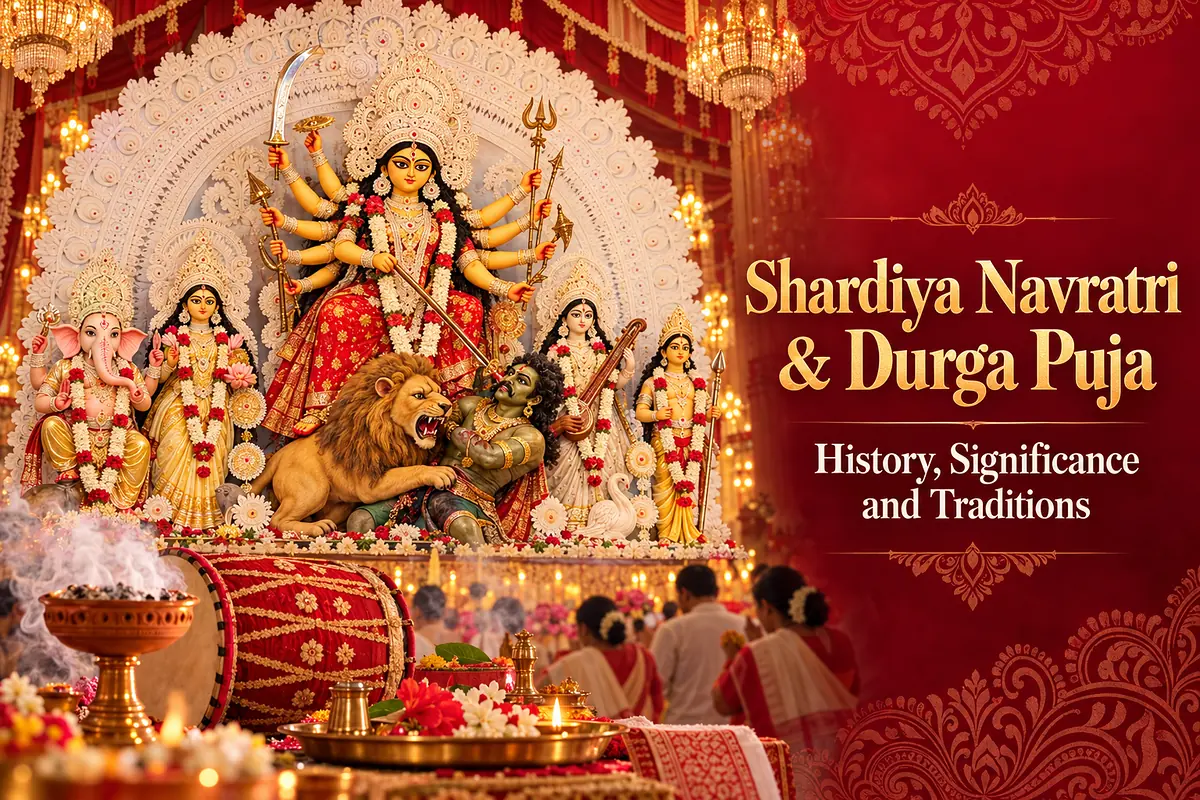
Shardiya Navratri is a nine-night festival honouring Maa Durga’s victory over Mahishasura, observed in the Shukla Paksha of Ashwin. In 2026, Navratri begins on 11 October. In Kolkata, Durga Puja runs from Maha Shashthi on 17 October to Bijoya Dashami on 21 October, with Bodhan, Navapatrika on Saptami, Pushpanjali and Sandhi Puja on Ashtami, Navami Havan and Sindoor Khela on Dashami.
Shardiya Navratri is recognized as an important Hindu festival of worship of Maa Durga. It involves the worship of the deity over nine nights, with the observance of fasts and traditional rites. The festival is famous as it depicts the victory of good (Maa Durga) over evil (Mahishasura).
Celebrated across India, Navratri has significant meaning in West Bengal as compared to other states. There are several events that take place during the nine days of Navratri, like Maha Ashtami Puja, Mahanavami, and Vijayadashami. That means to understand the significance of Shardiya Navratri and Durga Puja; it becomes imperative to study the various traditions celebrated during the festival.
What Is Shardiya Navratri?
Shardiya Navratri occurs during the Shukla Paksha of the Hindu month of Ashwin, which falls around September or October. Shardiya alludes to the Autumn season, and Navratri stands for nine nights.
The festival runs from Pratipada to Navami, and the tenth day is celebrated as Vijayadashami or Dussehra.
People do prayers and get blessings of Maa Durga at this time. Fasting is done by some of the family members, while some do the Aarti every day or read scriptures or go to temples for the puja. Some rituals may differ, but the purpose stays the same.
Shardiya Navratri 2026 Calendar: Dates, Goddesses and Colours
| Day | Date | Tithi | Goddess | Colour |
|---|---|---|---|---|
| Day 1 | Sunday, 11 Oct 2026 | Pratipada (Ghatasthapana) | Maa Shailputri | Orange |
| Day 2 | Monday, 12 Oct 2026 | Dwitiya | Maa Brahmacharini | White |
| Day 3 | Tuesday, 13 Oct 2026 | Tritiya | Maa Chandraghanta | Red |
| Day 4 | Wednesday, 14 Oct 2026 | Chaturthi | Maa Kushmanda | Royal Blue |
| Day 5 | Thursday, 15 Oct 2026 | Panchami | Maa Skandamata | Yellow |
| Day 6 | Friday, 16 Oct 2026 | Shashthi | Maa Katyayani | Green |
| Day 7 | Saturday, 17 Oct 2026 | Saptami (Maha Saptami) | Maa Kaalratri | Grey |
| – | Sunday, 18 Oct 2026 | Saptami continues; Ashtami begins 08:29 AM | – | – |
| Day 8 | Monday, 19 Oct 2026 | Ashtami (Durga Ashtami) | Maa Mahagauri | Purple |
| Day 9 | Tuesday, 20 Oct 2026 | Navami | Maa Siddhidatri | Peacock Green |
| Dussehra | Tuesday, 20 Oct 2026 | Dashami begins 12:51 PM | Vijayadashami | – |
Are You Facing any Problems in Life? So, this is the right time to Connect with our Astrologer on Chat and remove your obstacles. First Chat Free!
Why Is Shardiya Navratri Celebrated?
There is a well-known tale of Navratri that can be found in the text of Devi Mahatmya. The tale tells us about Goddess Durga fighting with the demon Mahishasura.
As the story goes, Mahishasura grew so powerful that he began to disturb the Gods, and they couldn’t defeat him on their own. The Gods turned to each other for help, and their combined powers gave rise to Goddess Durga to tackle the demon.
This triumph is celebrated as the victory of justice over pride and evil forces.
This is also why Maa Durga is represented as a powerful figure standing over Mahishasura with weapons in her multiple arms. Each weapon symbolizes her divine force given to her by the deities.
What Is the Connection Between Navratri and Durga Puja?
Both Shardiya Navratri and Durga Puja are part of the same festive season in fall, but the manner of their observance differs greatly from one another.
Navratri involves the worship of Goddess Shakti over nine days, depending on local culture and family practices. Durga Puja mainly involves praising Goddess Durga in an elaborate ceremony during the last days of the celebrations.
The Durga Puja festivities generally start from the day of Shashthi and go on till the occasion of Vijayadashami.
In Bengal, it is the practice to welcome Durga as a daughter returning home along with her children, giving the festival a unique sense of family along with its religious importance.
How Are the Five Main Days of Durga Puja Celebrated?
Maha Shashthi: Welcoming Maa Durga
Shashthi signifies the official start of the main festivities of Durga Puja in many Bengali customs.
In a ritual called Bodhan, the goddess is invoked and welcomed. Families start to visit the pandals, bringing the celebrations to life.
Maha Saptami: Worship and Sacred Rituals
The ritual of Navapatrika is performed during the day known as Saptami, which consists of bathing and worshipping nine different types of plants.
This day is closely connected to the nine forms of Goddess Durga, which are located next to the idol of Mati Devi and are worshipped.
On the sacred day, bhoga offerings and flowers are presented to the goddess.
Maha Ashtami: Anjali and Sandhi Puja
One of the important days in Durga Puja, Maha Ashtami witnesses a massive gathering of devotees for Pushpanjali, where flowers are offered, and mantras are chanted.
The Sandhi Puja is of great significance in Bengali Shakta tradition. This puja symbolizes the furious form of the Goddess as Chamunda.
Maha Navami: The Final Day of Worship
On the day of Navami, a variety of Puja rituals, prayers, and offerings to the Goddess are conducted.
The processional worship comes with the Havan ceremonies in many different pandals. Families come together to take part in the celebration and receive Prasad.
Vijayadashami: Farewell to the Goddess
Vijayadashami marks the ending of Durga Puja on a sentimental note.
In Bengal, married women perform Sindoor Khela by putting sindoor on one another and the Goddess, despite the differences in the community they belong to. After this event, the idol is taken for immersion.
How Is Shardiya Navratri Celebrated in Other States?
Different regions in India have different ways of celebrating the festival.
Gujarat is known for its Garba and Dandiya events, where people gather to dance in their traditional costumes and worship Shakti. In the states in the northern part of India, different forms of fasting, recitation of Durga Saptashati, and Kanya Puja are the main highlights of Navratri.
On Dussehra day, there are Ramlila plays performed, and effigies of Ravana are burnt.
Will 2027 be a year of strength or stress? Get Your Detailed Report Now!
Why This Eve Remains Important
Shardiya Navratri unites religious worship, mythology, and traditions, passed down from generation to generation in families. A Puja held at home, a Durga puja in the neighbourhood, and a Garba gathering seem different from each other but have a significant part to play in the festival.
For devotees, the festival is a time for worship and family gatherings, while it serves the communities as a chance to maintain the music, art, practices, and customs.
FAQs
When is Navratri or Durga Puja in 2026?
Navratri or Durga Puja in 2026 will fall in the lunar month of Ashwin, which typically occurs in September or October.
What is the significance of Navratri?
Navratri is a festival dedicated to Goddess Durga and her nine avatars, celebrated for her victory over the buffalo demon Mahishasura, symbolizing the triumph of peace and dharma over ego and evil.
How is Navratri celebrated in different parts of India?
Navratri is celebrated differently across India. In Western states, it involves rituals like Ghatasthapana and Garba dance, while in Northern India, it coincides with Ramlila performances. In Eastern states, it is celebrated as Durga Puja with grand festivities.
What are the rituals associated with Navratri?
Rituals during Navratri include fasting, performing Garba and Dandiya dances, and worshipping Goddess Durga in her nine forms. In Western India, a pot with a lamp is kept lit for nine days as part of Ghatasthapana.
Why do people avoid grains, onion, and garlic during Navratri?
During Navratri, people avoid grains, onion, and garlic as it is believed that these foods contain negative energy due to seasonal changes, and fasting is observed to purify the body and spirit.