



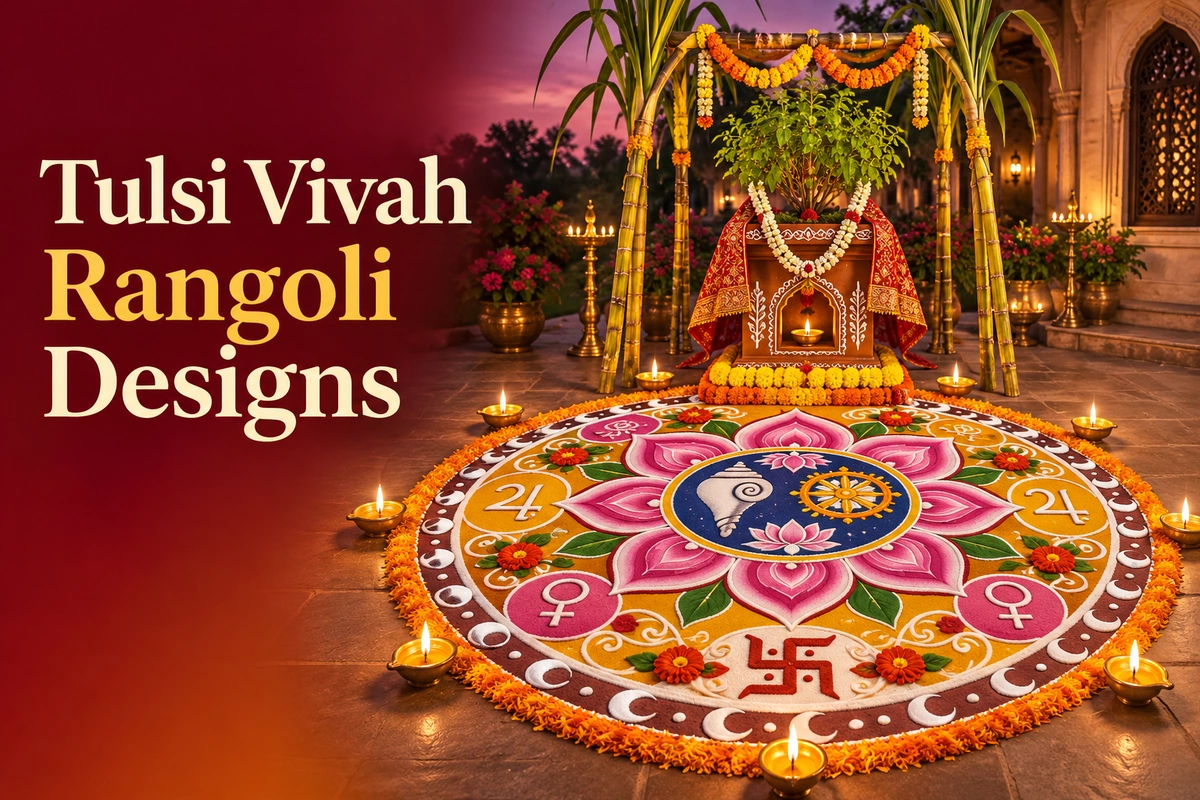
For Tulsi Vivah 2026 on Saturday, 21 November, popular rangoli designs include an eight-petal lotus for Goddess Lakshmi, a Tulsi Vrindavan motif, Lord Vishnu’s Shankh and Chakra, and a Swastik with four diyas. Yellow (Jupiter), white (Moon) and red (Mars) are considered especially auspicious colours, ideally made with rice flour and flower petals.
Tulsi Vivah is more than a traditional wedding celebration. In Vedic astrology and Hindu beliefs, the occasion is associated with the blessings of Lord Vishnu, Goddess Lakshmi and the sacred Tulsi plant. It also marks the end of Chaturmas on Dev Uthani Ekadashi, a period when many auspicious ceremonies are traditionally avoided.
As homes prepare for Tulsi Vivah 2026 on November 21, rangoli becomes an important part of the festive decoration. But have you ever considered choosing your rangoli design and colours based on their astrological significance? From the prosperity-associated lotus to the calming influence of white and the devotional symbolism of yellow, traditional rangoli motifs can add a deeper meaning to your celebration.
Here are seven Tulsi Vivah rangoli designs inspired by Vedic astrology, planetary symbolism and traditional Hindu beliefs.
Why Is Rangoli Made During Tulsi Vivah?
In Hindu tradition, rangoli is considered an auspicious way to welcome divine blessings into the home. Its colourful patterns are often associated with harmony, prosperity and positive energy.
During Tulsi Vivah, rangoli is usually created near the Tulsi Vrindavan or at the entrance of the house. From an astrological perspective, the designs and colours used can be connected with different planetary energies.
For instance, yellow is traditionally associated with Jupiter, the planet linked with wisdom, prosperity and spiritual growth. White is connected with the Moon and its symbolism of peace and emotional balance. Red is associated with Mars and represents energy, courage and vitality.
Want to know which planets are strongest in your own birth chart? Get Your Personalised Birthday Horoscope Report
7 Auspicious Tulsi Vivah Rangoli Designs Based on Astrology
1. Lotus Rangoli for Goddess Lakshmi’s Blessings
A lotus rangoli is one of the most suitable choices for Tulsi Vivah. The lotus is closely associated with Goddess Lakshmi, who represents wealth, abundance and prosperity.
From an astrological perspective, Lakshmi is traditionally connected with Venus, the planet associated with luxury, beauty, comfort and material happiness.
- Draw an eight-petal lotus near the Tulsi Vrindavan.
- Use pink, red and white rangoli colours.
- Add yellow or golden details to represent prosperity.
- Place small diyas around the design.
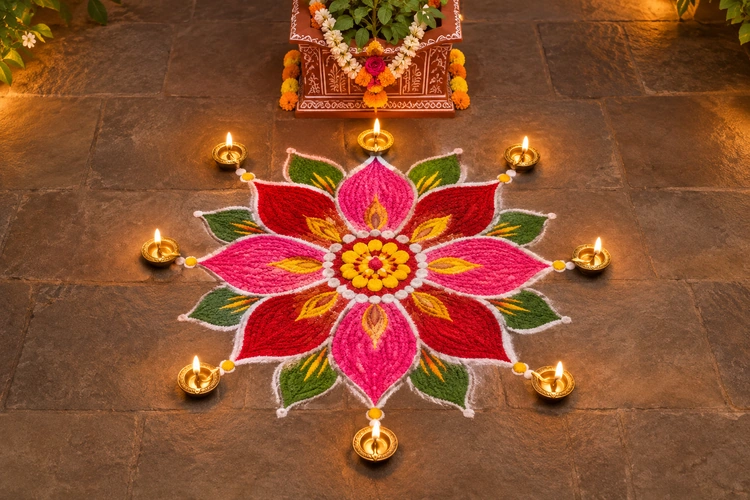
2. Yellow and White Rangoli for Jupiter’s Blessings
Jupiter, known as Guru or Brihaspati in Vedic astrology, represents wisdom, spirituality, knowledge and good fortune. Yellow is traditionally associated with this planet.
A yellow-and-white rangoli can therefore be a meaningful choice for Tulsi Vivah.
- Create a circular floral design.
- Use yellow, white and light orange colours.
- Add small lotus petals or traditional patterns.
- Place a diya at the centre.
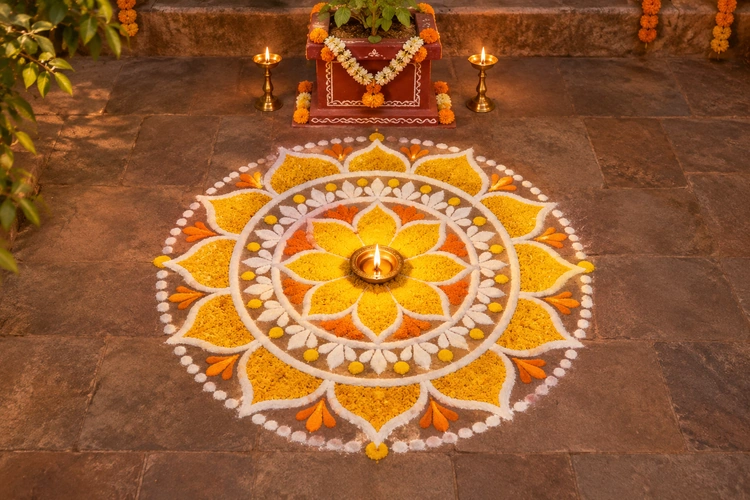
3. Tulsi Vrindavan Rangoli for Spiritual Protection
The Tulsi plant holds a special place in Hindu worship and is considered dear to Lord Vishnu. Creating a rangoli around the Tulsi Vrindavan reflects the spiritual importance of the festival.
In traditional astrology, Jupiter represents religious faith and spiritual learning, while the Moon is associated with emotional peace and nurturing energy.
- Draw the shape of a Tulsi Vrindavan in the centre.
- Add green leaves and small flowers around it.
- Use white and yellow outlines.
- Decorate the border with small dots and diyas.
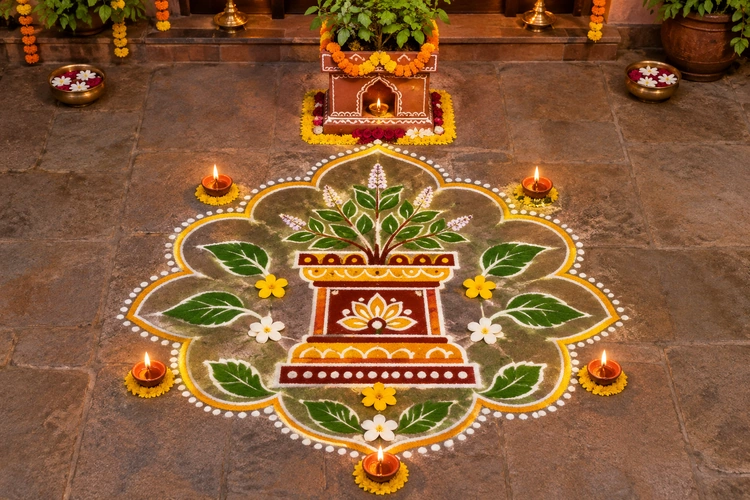
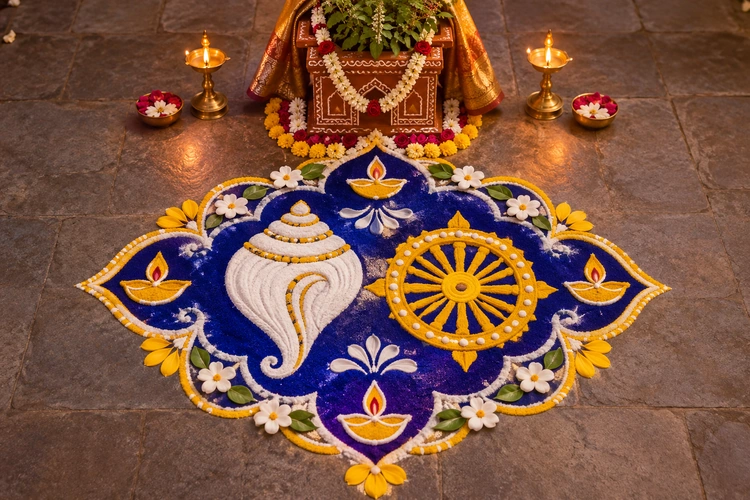
4. Shankh and Chakra Rangoli for Lord Vishnu’s Blessings
The conch (Shankh) and discus (Chakra) are among the most recognisable symbols associated with Lord Vishnu. Since Tulsi Vivah celebrates the divine union of Tulsi and Vishnu, these motifs are especially relevant.
- Draw a Shankh or Chakra in the centre.
- Use yellow, blue and white shades.
- Create a floral border around the main symbol.
- Add small diya patterns to complete the design.
5. Red and Orange Rangoli for Mars Energy
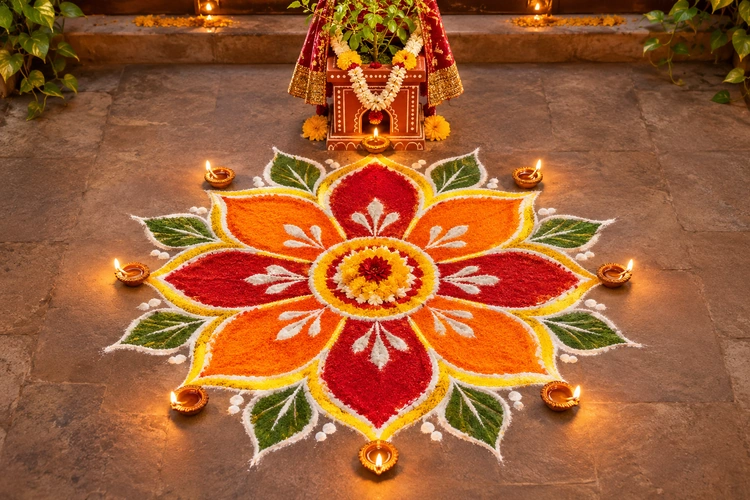
Mars, or Mangal, represents courage, action, determination and energy in Vedic astrology. Red is traditionally associated with this planet.
A red-and-orange floral rangoli can bring a vibrant festive look to the Tulsi Vivah mandap.
- Draw a large flower with red and orange petals.
- Add yellow and white outlines.
- Use green leaves to balance the colours.
- Place small diyas around the outer design.
6. Moon-Inspired White Rangoli for Peace and Harmony
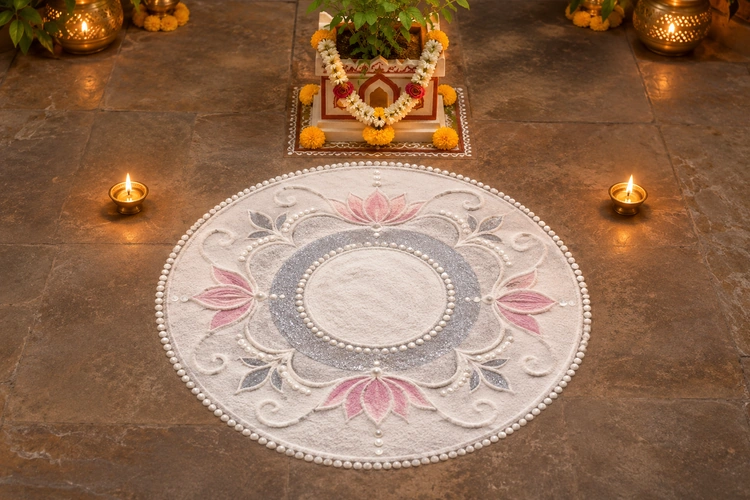
The Moon, or Chandra, represents emotions, mental peace and the nurturing side of life in Vedic astrology. White is commonly associated with lunar energy.
A white rangoli with subtle pink or silver details can create a peaceful atmosphere around the Tulsi plant.
- Draw a circular pattern inspired by the full Moon.
- Use white rice flour or rangoli powder.
- Add pink lotus petals or small floral details.
- Decorate the edges with tiny dots.
7. Swastik Rangoli for Auspicious Beginnings
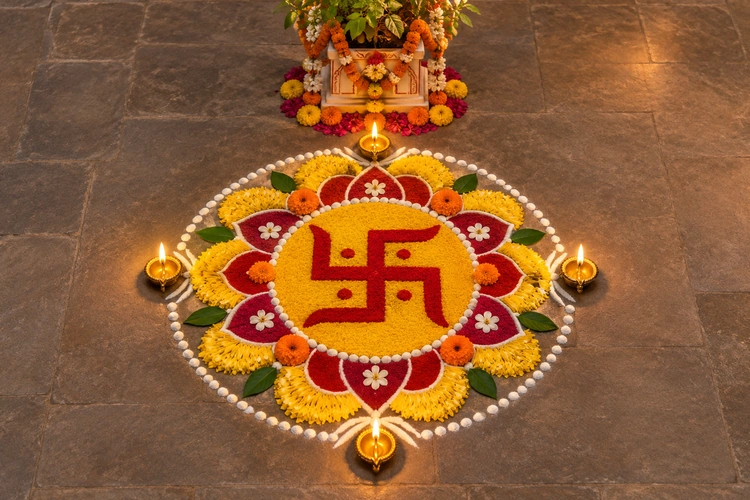
The Swastik is an ancient auspicious symbol in Hindu traditions. It is associated with well-being, good fortune and positive beginnings.
For Tulsi Vivah, a Swastik rangoli can be combined with planetary colours to give the design an astrological touch.
- Draw a Swastik in the centre using red or yellow.
- Surround it with a circular floral pattern.
- Add white dots along the border.
- Place four small diyas around the design.
Which Rangoli Colours Are Auspicious According to Astrology?
Different colours carry different symbolic meanings in Vedic astrology. You can choose a combination based on the atmosphere you want to create for Tulsi Vivah , or pick the colour of the planet that rules your zodiac sign.
| Colour | Planetary Association | Traditional Symbolism |
|---|---|---|
| Yellow | Jupiter (Guru) | Wisdom, prosperity and spiritual growth |
| White | Moon (Chandra), Venus (Shukra) | Peace, purity and emotional balance |
| Red | Mars (Mangal) | Courage, energy and saubhagya (marital good fortune) |
| Green | Mercury (Budh) | Growth, learning and communication |
| Pink | Venus (Shukra) | Beauty, affection and harmony |
| Orange / Saffron | Sun (Surya) | Confidence, enthusiasm and vitality |
How to Make Your Tulsi Vivah Rangoli More Auspicious
A few thoughtful additions can make your decoration more meaningful:
- Choose the right location: Make the rangoli near the Tulsi Vrindavan or entrance, leaving enough space for the puja.
- Use natural materials: Rice flour, flower petals and natural colours are traditional alternatives to synthetic powders.
- Add a diya: Lighting a lamp is an important part of Hindu worship and adds warmth to the decoration.
- Create a floral mandap: Use marigold flowers and sugarcane stalks to decorate the Tulsi plant.
- Keep the design balanced: Symmetrical patterns and circular borders can give the rangoli a neat and harmonious appearance.
Not sure which colours or symbols suit your family this Tulsi Vivah? Talk to an Astrologer – First Chat Free!
Conclusion
Tulsi Vivah 2026 is an opportunity to celebrate devotion, prosperity and the sacred bond between Goddess Tulsi and Lord Vishnu. A rangoli inspired by Vedic astrology can add another layer of meaning to the occasion.
Whether you choose a Jupiter-inspired yellow design, a Lakshmi-associated lotus or a Vishnu-inspired Shankh and Chakra pattern, let your decoration reflect the spirit of the festival. After all, the intention behind the prayer and the devotion with which it is performed matter more than the complexity of the design.
FAQs
Why is rangoli made during Tulsi Vivah?
Rangoli is created during Tulsi Vivah as an auspicious way to welcome divine blessings into the home. It is associated with harmony, prosperity, and positive energy, and is often made near the Tulsi Vrindavan or at the entrance of the house.
What are some popular Tulsi Vivah rangoli designs for 2026?
Popular Tulsi Vivah rangoli designs for 2026 include an eight-petal lotus for Goddess Lakshmi, a Tulsi Vrindavan motif, Lord Vishnu’s Shankh and Chakra, and a Swastik with four diyas.
What is the significance of using yellow and white in rangoli?
Yellow and white are considered auspicious colors in rangoli. Yellow is associated with Jupiter, symbolizing wisdom and prosperity, while white is connected with the Moon, representing peace and emotional balance.
How does astrology influence Tulsi Vivah rangoli designs?
Astrology influences Tulsi Vivah rangoli designs by connecting colors and motifs with planetary energies. For example, yellow is linked with Jupiter for spiritual growth, and red with Mars for energy and vitality.
What is the spiritual importance of the Tulsi plant in Tulsi Vivah?
The Tulsi plant holds a special place in Hindu worship and is considered dear to Lord Vishnu. Creating a rangoli around the Tulsi Vrindavan reflects the spiritual significance of the festival, emphasizing devotion and protection.