



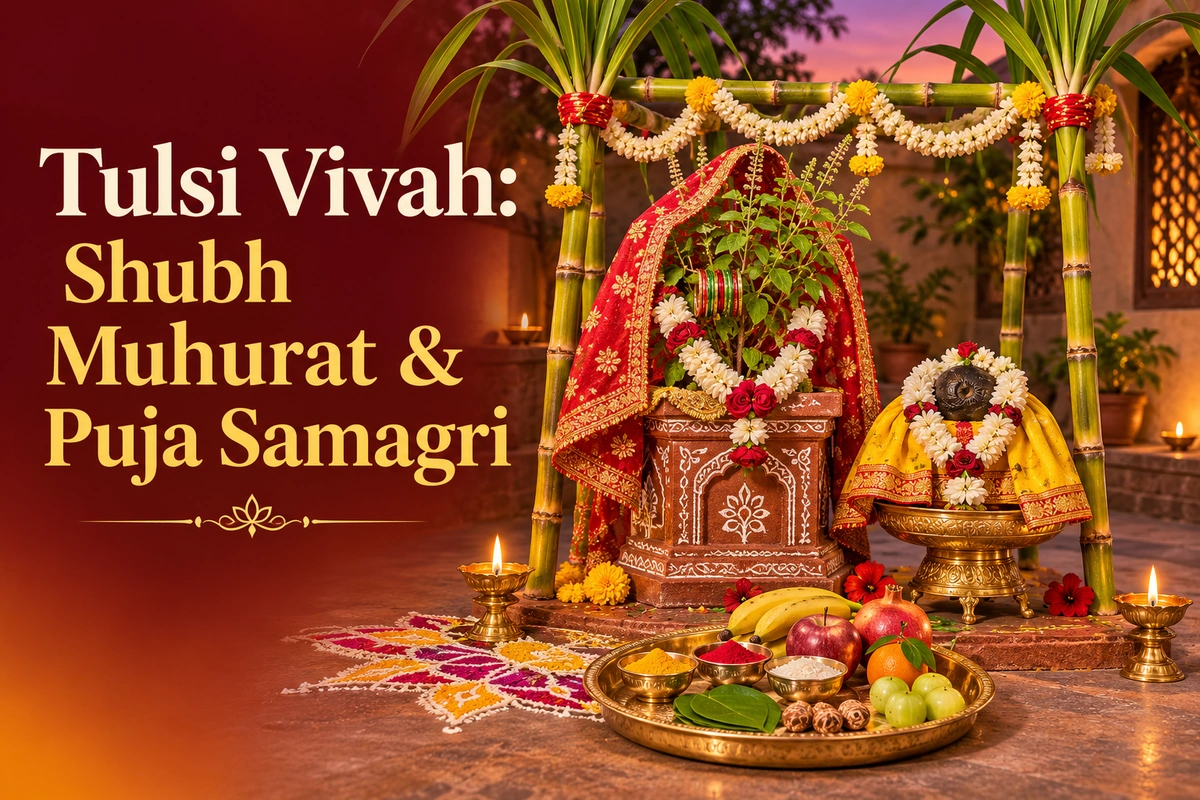
Tulsi Vivah 2026 falls on Saturday, 21 November, on Kartik Shukla Dwadashi. Dwadashi tithi runs from 06:31 AM on 21 November to 04:56 AM on 22 November. The ceremony is best performed in Pradosh Kaal (05:25 PM to 07:49 PM), and the Godhuli muhurat is 05:25 PM to 05:52 PM.
As autumn arrives in India during the month of Kartik, many households prepare for the ceremonial wedding of Goddess Tulsi to Lord Vishnu. This year, people observing the ritual are paying close attention to the time of twilight, differences in religious texts from various regions, and making sure they have everything they need, going beyond just the traditional story of Vrinda and Jalandhar.
Tulsi Vivah 2026: Date, Tithi & Pradosh Kaal Muhurat
Tulsi Vivah 2026 falls on Saturday, 21 November 2026, Kartik Shukla Dwadashi., which is Kartik Shukla Dwadashi. As per tradition, the time for Hindu weddings is Godhuli Vela, and performing the ritual in the Pradosh Kaal period is considered most auspicious.
| Details | Date and Time |
|---|---|
| Tulsi Vivah 2026 (Dwadashi tradition) | Saturday, 21 November 2026 |
| Tulsi Vivah 2026 (Ekadashi tradition) | Friday, 20 November 2026 |
| Dwadashi Tithi Begins | 06:31 AM on 21 November 2026 |
| Dwadashi Tithi Ends | 04:56 AM on 22 November 2026 |
| Ekadashi Parana (Smarta) | 01:11 PM to 03:18 PM on 21 November 2026 |
| Pradosh Kaal Puja Window | 05:25 PM to 07:49 PM |
| Godhuli Muhurat | 05:25 PM to 05:52 PM |
Wedding season begins with Tulsi Vivah. Planning a marriage in the family? Get Your Detailed Kundli Matching Report
Ekadashi vs. Dwadashi: Why Tulsi Vivah Is Celebrated on Both Days
Generally, the devotees are in a dilemma about whether to perform the ritual on Dev Uthani Ekadashi (November 20, 2026) or Uthana Dwadashi (November 21, 2026). In the time frame of the five days beginning with the Kartik Shukla Ekadashi and ending with the Kartik Purnima are considered as sacred time for performing this marriage. And there are two regional customs for this:
- In many parts of North India, Maharashtra, and Gujarat, Lord Vishnu wakes up from his four-month sleep on Dev Uthani Ekadashi, and on the same day, Lord Vishnu married Goddess Tulsi.
- In Maharashtra, Goa, Gujarat and South India, Ekadashi is kept for the fast, and the wedding is performed on Dwadashi after parana. In 2026, the Smarta parana ends at 03:18 PM on 21 November, before the evening ceremony begins.
Regional Traditions: Tulsi Habba, Ksheerabdhi Dwadashi & Amla Pujan
Kartik Shukla Dwadashi is celebrated across South India as follows:
- Tulasi Habba (Karnataka): On the Utthana Dwadashi, the Tulasi Katte in the courtyard is painted with red oxide (Geru) and white lime, and houses are decorated. A canopy of 4 stalks of sugarcane (Kabbu) is installed, and the Nellikai Deepas, which are Ghee lamps made from fresh gooseberries (Amla), are lit.
- Ksheerabdhi Dwadashi (Andhra Pradesh & Telangana): Lord Vishnu and Goddess Lakshmi were born from Ksheerabdhi, the Ocean of Milk.
- Amla pooja: In Telugu and Kannada houses, a fresh amla plant is planted in a Tulsi plant. It is a symbol of Lord Vishnu. It bestows the house with long life, happiness, good health, and peace.
Complete Tulsi Vivah Puja Samagri List
Bring these items together and have them in your courtyard or balcony pooja space by sundown on 21st November.
- For the Mandap/Pooja: 4-5 pcs of Sugarcane with leaves, red sacred threads(kalva), Rice (for rangoli), turmeric, and kumkum are necessary.
- For the Bride and Groom: Red chunaris, glass bangles, sindoor, mehandi, and a mirror for Tulsi Mata. For Lord Shaligram: Yellow pitambari cloth and white chandan paste.
- For the Wedding Rites: Keep the following ready: Clean cloth (antarpat), rice pieces (akshat) with turmeric, betel leaves, supari, and coins.
- During the Autumn Bhog offering: Use fresh amla, singhara, shakarkand, ber, jaggery, and lamps prepared with cow’s ghee.
Step-by-Step Evening Ceremony During Pradosh Kaal
- Clean the Tulsi plant and do a Rangoli with rice flour around Tulsi. Keep four sugarcane stalks to cover the plant.
- Next, bathe the Shaligram with Panchamrit, apply sandalwood paste, and dress him with yellow silk. For the Tulsi, dress it with a red chunari, bangles, and sindoor.
- The Mangalashtak Mantra is read, a yellow thread is brought, and a knot is tied between their clothes. After that, rice grains are showered.
- Lastly, circumambulate the Shaligram four or seven times clockwise. Provide seasonal fruits as Naivedya. End the day with an evening aarti.\
Not sure which day or muhurat your family should follow? Talk to an Astrologer – First Chat Free!
Conclusion: Welcoming Auspicious Beginnings
Celebrating Tulsi Vivah during the holy hour of Pradosh Kaal connects one with ancient Vedic traditions. Depending on the region, people perform this ritual using Shaligrams (North India), Nellikai Deepams (Karnataka), and Ksheerabdhi Dwadashi Amla Pujan. By worshipping the divine marriage of the goddess Tulsi and Lord Vishnu, it cleanses your home and brings good fortune and celebration into your life.
FAQs
When is Tulsi Vivah in 2026?
Tulsi Vivah in 2026 falls on Saturday, 21 November, which is Kartik Shukla Dwadashi.
What is the auspicious time for performing Tulsi Vivah in 2026?
The auspicious time for performing Tulsi Vivah in 2026 is during the Pradosh Kaal, from 05:25 PM to 07:49 PM, with Godhuli muhurat from 05:25 PM to 05:52 PM.
What items are needed for the Tulsi Vivah ceremony?
For the Tulsi Vivah ceremony, devotees should gather items like Shaligrams, Nellikai Deepams, and Ksheerabdhi Dwadashi Amla Pujan materials in their courtyard or balcony pooja space by sundown.
Why is Tulsi Vivah celebrated?
Tulsi Vivah is celebrated to mark the ceremonial wedding of Goddess Tulsi to Lord Vishnu, symbolizing the beginning of the Hindu wedding season and bringing good fortune and celebration into one’s home.
What should one do if unsure about the correct day or muhurat for Tulsi Vivah?
If unsure about the correct day or muhurat for Tulsi Vivah, one can consult an astrologer. Many services offer the first chat free to help with such queries.