



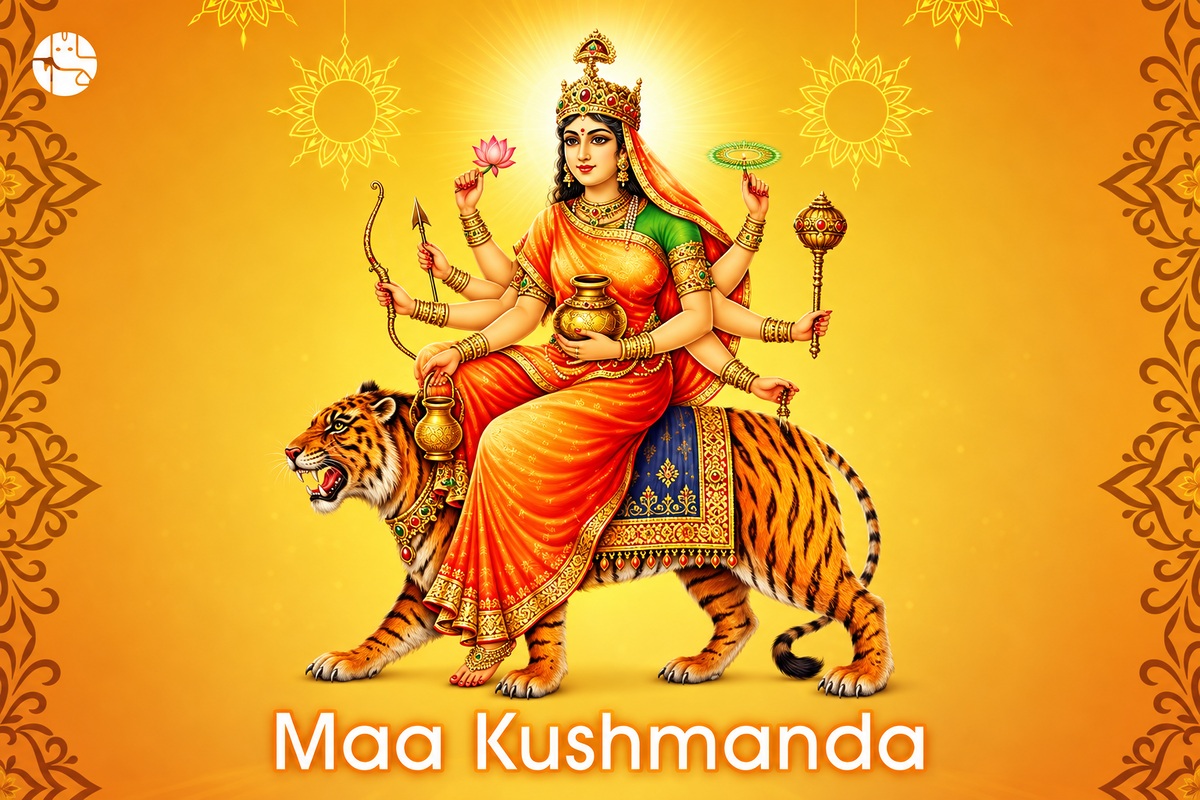
Maa Kushmanda is the fourth form of Goddess Durga, worshipped on Day 4 of Navratri, Wednesday, 14 October 2026. Her name means the “little warm cosmic egg,” as she is believed to have created the universe with her smile. She is linked to the Sun and the Anahata chakra. Devotees offer Jui flowers and Malpua.
Maa Kushmanda is the fourth manifestation of Goddess Durga and is worshipped on the fourth day of Navratri. Associated with cosmic creation, light and divine energy, she represents the power that brings life and hope into existence. According to Hindu tradition, Maa Kushmanda created the universe with her gentle smile when darkness prevailed everywhere.
In 2026, Maa Kushmanda will be worshipped on Wednesday, October 14, the fourth day of Sharad Navratri. Devotees seek her blessings for good health, prosperity, strength and happiness. Her worship also reminds us that even a small spark of positivity can bring light into difficult circumstances.
Who Is Maa Kushmanda?
Maa Kushmanda is directly connected with Brahmanda, which means ‘Cosmic Egg.’ She is enshrined as Adishakti, which refers to primordial divine energy used in the creation process. According to Hindu beliefs, her shining smile gave light to the universe.
Maa Kushmanda is shown with eight hands, and that’s why she is called Ashtabhuja Devi. She carries different divine items that consist of kamandal, bow, arrow, lotus, pot of elixir, discus, club, and rosary. She is also shown riding a lion, which means being fearless.
Her shining golden color represents the power of the sun. In the belief of tradition, Kushmanda lives in the center of the sun and controls its energy. It symbolizes the energy of life.
Muhurat Timings For the Fourth Day Of Navratri 2026
| Navratri Day 4 Details | 2026 |
|---|---|
| Date | Wednesday, October 14, 2026 |
| Goddess | Maa Kushmanda |
| Chaturthi Tithi Begins | 11:29 PM on Oct 13, 2026 |
| Chaturthi Tithi Ends | 01:14 AM on Oct 15, 2026 |
| Colour of the Day | Royal Blue |
| Chakra | Anahata Chakra |
Issue or Problems in Your Life? Click Here and Get First Free Online Astrologer Chat at GaneshaSpeaks
Maa Kushmanda Significance on the Fourth Day of Navratri
During this day, devotees worship Maa Kushmanda, who represents the power of creation, existence, and abundance. The followers render their prayers to Maa Kushmanda hoping for her blessings so that they would be able to overcome all the barriers in life.
- Creativity and new beginnings: Symbolizes life and opportunities.
- Health and vigor: Represents a force of energy.
- Wealth and affluence: Grants devotees with wealth and health.
- Bravery and self-assurance: Gives strength to face difficulties.
- Light and positivity: Her smile signifies hopefulness.
Maa Kushmanda Puja Vidhi
The worshippers perform the worship of Maa Kushmanda on Day 4 of Navratri by means of prayers, chanting of mantras, and offering traditional items which might differ from region to region and from family to family.
A simple ritualistic performance of worship of Maa Kushmanda involves:
- Cleaning the place of worship with a picture or idol of the Goddess,
- Lighting a diya.
- Offering flowers, fruits, and prasad.
- Chanting the mantra of Maa Kushmanda with sincerity.
- Wishing for health, happiness, wealth, and spiritual elevation.
- Finishing the worship by performing Aarti.
Maa Kushmanda Mantra
Chanting the Maa Kushmanda mantra is a traditional way to express devotion and seek the Goddess’s blessings.
Sanskrit Mantra:
सुरासम्पूर्ण कलशं रुधिराप्लुतमेव च।
दधाना हस्तपद्माभ्यां कूष्माण्डा शुभदास्तु मे॥
Maa Kushmanda Mantra in English:
Surasampurna Kalasham Rudhiraplutameva Cha,
Dadhana Hastapadmabhyam Kushmanda Shubhadastu Me.
The Maa Kushmanda prayer mantra is an age-old mantra that explains the divine appearance of the Goddess and asks for her goodness. Followers can recite the mantra while engaged in worship or meditation with concentration.
The short name mantra is also commonly chanted:
ॐ देवी कूष्माण्डायै नमः॥
Om Devi Kushmandayai Namah.
Maa Kushmanda and the Anahata Chakra
In the realm of spiritual practices, Maa Kushmanda is connected with the Anahata Chakra, which is popularly called the heart chakra. Due to being the source of love, compassion, and emotional harmony, this chakra is, in fact, an epitome of all these virtues.
Her being associated with the heart chakra encourages her followers to develop traits such as kindness, gratitude, and inner strength. Similar to her celestial smile that lights up the universe, Maa Kushmanda’s role signifies how positivity and compassion can change people’s perspectives during hard moments in life.
Will 2027 be a year of strength or stress? Get Your Detailed Report Now!
How to Seek Maa Kushmanda’s Blessings During Navratri
Devotees can honour Maa Kushmanda through traditional worship and mindful actions throughout the day. You can:
- Chant her mantra during morning prayers.
- Offer flowers and fruits during puja.
- Practise gratitude and maintain a positive outlook.
- Spend time in prayer or meditation.
- Help others through acts of kindness and generosity.
Why Is Maa Kushmanda Worshipped During Navratri?
Maa Kushmanda represents the Divine’s creative force, the bright light that disperses the darkness, and the bestowing of life. Families know how they can begin new initiatives successfully by worshipping Maa Kushmanda on day four of Navratri.
This Navratri, worship Maa Kushmanda, the fourth of the nine forms of Navdurga, through prayers, rituals and mantras.
For more details on Vedic science, festival traditions, and auspicious practices, refer to the information provided by GaneshaSpeaks.