



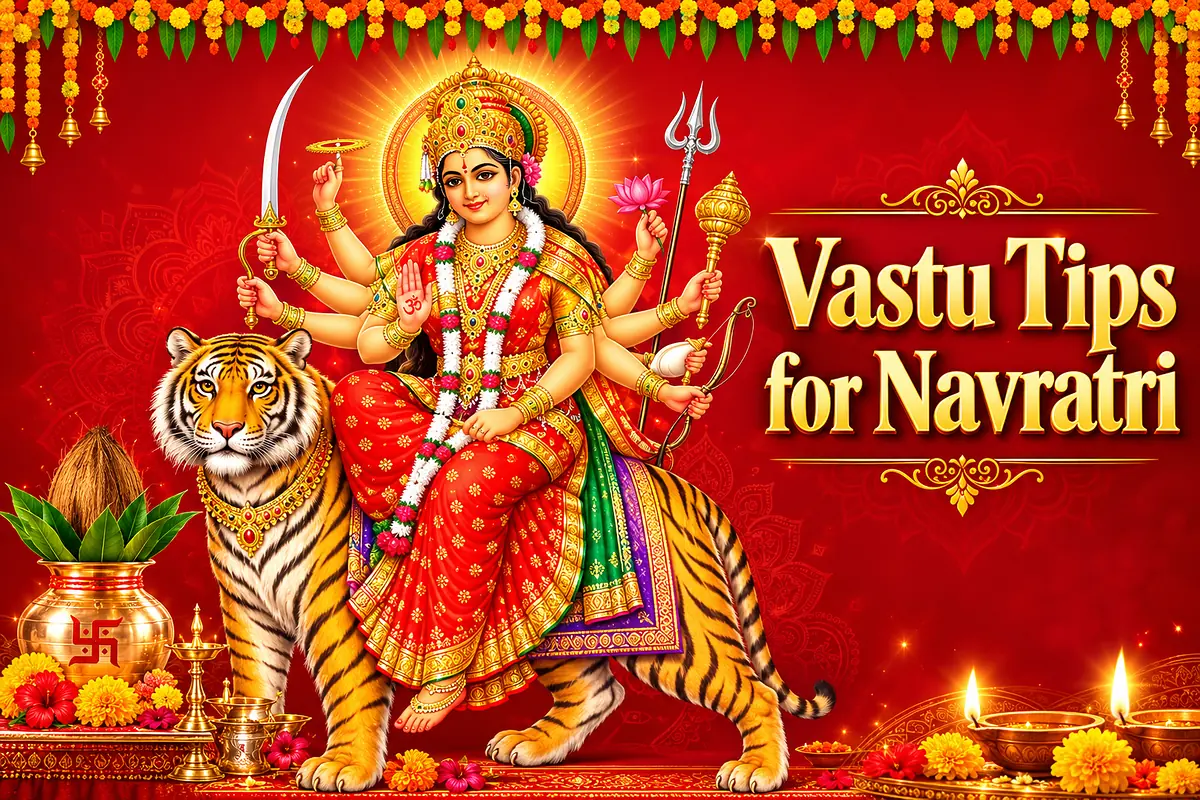
During Shardiya Navratri, from 11 to 20 October 2026, Vastu recommends placing Maa Durga’s idol in the northeast on a raised chowki, facing east or north while praying, and keeping the Akhand Jyoti in the southeast (the Agni corner). Decorate the entrance with a mango or Ashoka leaf toran, and keep the puja space clean and clutter-free.
Navratri brings a special sense of devotion to the house. We clean our puja ghar, offer our prayers, welcome the Goddess Durga, and worship her with various pujas. But according to Vastu, the direction of the puja ghar is important in a spiritual sense.
Whether it’s selecting the correct direction for Ghatasthapana or setting up the Akhand Jyoti, there are some Vastu principles that can help gain peace, prosperity, and harmony during the Navratri celebrations. Take a look at some traditional Navratri Vastu tips you can follow to make your home perfect for the nine-day festivity.
Shardiya Navratri 2026 Calendar: Dates, Goddesses and Colours
| Day | Date | Tithi | Goddess | Colour |
|---|---|---|---|---|
| Day 1 | Sunday, 11 Oct 2026 | Pratipada (Ghatasthapana) | Maa Shailputri | Orange |
| Day 2 | Monday, 12 Oct 2026 | Dwitiya | Maa Brahmacharini | White |
| Day 3 | Tuesday, 13 Oct 2026 | Tritiya | Maa Chandraghanta | Red |
| Day 4 | Wednesday, 14 Oct 2026 | Chaturthi | Maa Kushmanda | Royal Blue |
| Day 5 | Thursday, 15 Oct 2026 | Panchami | Maa Skandamata | Yellow |
| Day 6 | Friday, 16 Oct 2026 | Shashthi | Maa Katyayani | Green |
| Day 7 | Saturday, 17 Oct 2026 | Saptami (Maha Saptami) | Maa Kaalratri | Grey |
| – | Sunday, 18 Oct 2026 | Saptami continues; Ashtami begins 08:29 AM | – | – |
| Day 8 | Monday, 19 Oct 2026 | Ashtami (Durga Ashtami) | Maa Mahagauri | Purple |
| Day 9 | Tuesday, 20 Oct 2026 | Navami (Maha Navami) | Maa Siddhidatri | Peacock Green |
| Dussehra | Tuesday, 20 Oct 2026 | Dashami begins 12:51 PM | Vijayadashami | – |
Are You Facing any Problems in Life? So, this is the right time to Connect with our Astrologer on Chat and remove your obstacles. First Chat Free!
1. Place the Idol in the Northeast
The northeast direction, also called Ishanya, is generally considered to be a lucky direction for worshipping God.
During Navratri, it is said that Maa Durga’s idol or picture should be placed in this part of the house. It can be placed on a raised wooden platform or Chowki, not on the ground.
Select a peaceful space away from bathrooms or clutter in the home. If the northeast is unavailable, then you can consider a clean and dedicated Puja corner rather than disturbing your entire home arrangement.
2. Face East or North During Navratri Puja
The direction you face when praying is also significant in Vastu Shastra.
Traditionally, devotees are advised to stand facing the east or north during the idol worship of Maa Durga. The east direction is indicative of the sun, new beginnings, and knowledge. The north direction is auspicious for abundance and prosperity.
Position the idol and yourself appropriately, with plenty of room to complete the Aarti, offer flowers, and recite the mantras.
3. Keep the Akhand Jyoti in the Southeast
Many Hindu families light an Akhand Jyoti during Navratri. This never-extinguishing lamp symbolizes faith and devotion.
According to Vastu, the southeast part of the house represents Agni, the fire element, which makes it essential to place the sacred lamp at this corner of the Puja room/area.
4. Choose Auspicious Colours for the Puja Space
A serene place of worship can bring peace to your daily prayers.
According to Vastu principles, pastel yellow, pastel green, and pink are considered suitable colours for the room where Goddess Durga is worshipped. These are the colours of positive energy.
You don’t need to paint the whole room. A clean cloth, a decorative background or some simple flowers are enough. Some rituals also include red clothing or red decorations for Maa Durga, and many devotees match their décor to the Navratri colour of the day.
5. Decorate the Entrance with Leaves and Sacred Symbols
The main entrance is the most critical area of the house in Vastu.
Toran, made from mango/Ashoka leaves, can be used to adorn the door during Navratri. Draw a Swastik on the ground with Kumkum, which is believed to be extremely propitious, and it is a way of invoking the blessing of the Goddess.
According to the original Vastu rules, you can keep a vessel filled with pure water at the entrance, placed on the eastern or northern side and decorated with a flower.
6. Keep the Home Clean and Clutter-Free
Maintaining cleanliness is one of the simplest Navratri rituals.
Clean the puja area, remove unnecessary items from the Puja Sthal and keep everything needed for Ghatasthapana ready beside the spot where the Kalash will be placed, along with the idol of the Goddess. Many families also sow Jware beside the Kalash on this day.
A tidy environment makes it simpler to remain focused during prayer. A clean environment is also seen as a way of fulfilling an age-old custom that is connected with the worship of Maa Durga.
7. Use Chandan, Dhoop and Bells During Worship
The use of fragrance and sound has been a part of Hindu puja for ages. Chandan or sandalwood paste has been traditionally viewed as auspicious and can be used in Maa Durga’s Puja.
In some homes, dhoop made with guggul and other traditional ingredients is used. Ringing bells and blowing Shankh, or a conch shell, are ways of attracting the blessings of God and marking sacred moments.
8. Dispose of Puja Materials Respectfully
Flowers, leaves, fruits, remaining incense, and other items used in pujan must be disposed of after the Navratri puja.
Segregate the biodegradable waste separately from plastic and other non-biodegradable waste. Flowers and leaves are compostable in most places, and reusable Puja items may be retained for use at a later date.
Will 2027 be a year of strength or stress? Get Your Detailed Report Now!
Do These Vastu Tips Apply to Chaitra Navratri?
Yes. Vastu can be applied for basic rules regarding Ghatasthapana, idol placement, Puja directions, and purity during Chaitra and Shardiya Navratri.
Chaitra Navratri is observed in the month of Chaitra, and Shardiya Navratri in Ashwin in the Hindu calendar. The rituals performed during Navratri may differ by region, but both festivals are in reverence of Maa Durga and her various incarnations.
Welcoming Maa Durga with Devotion and Harmony
Navratri Vastu is practiced to keep a serene environment to welcome and honor the goddess. The position of the idol, the lamp, and the entrance decorations are traditional methods to honor Durga Maa in the house.
However, a big pooja room is not essential for sincere worship. Navratri can be made meaningful with a clean corner, simple offerings, and a peaceful mind.
With traditional Vastu advice and some simple daily routines, devotees can celebrate the occasion with care and positivity.
FAQs
What is the significance of placing the idol of Goddess Durga in the northeast corner during Navratri?
Placing the idol of Goddess Durga in the northeast corner of your home during Navratri enhances the effectiveness of your worship and helps in attracting positive energies.
Why should devotees face the East or North direction while praying during Navratri?
Facing the East or North direction while praying during Navratri is believed to bring courage, bravery, and success, as these directions are considered auspicious in Vastu Shastra.
How does lighting an Akhand Jyoti during Navratri benefit the home?
Lighting an Akhand Jyoti facing southeast during Navratri is said to fill the home with joy and wealth, as well as help in overcoming adversaries.
What role does Chandan play in Navratri rituals according to Vastu Shastra?
Chandan is considered a source of good energy in Vastu Shastra, and using it during Navratri rituals can enhance the success of these rituals.
How can negative energies be removed from the home during Navratri?
Negative energies can be removed from the home by tying garlands of mango and Ashok leaves on the main door throughout the nine days of Navratri.