


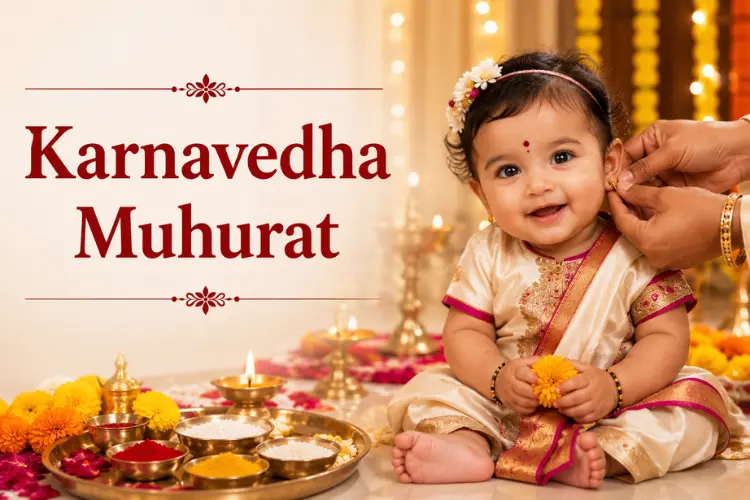
In Hinduism, every auspicious event is performed according to the muhurat determined by experienced astrologers. Ceremonies such as the 28th-day celebration after birth, Annaprashan, and ear piercing are considered significant milestones for children. Karnavedha Sanskar is the Hindu ritual that marks a child’s first ear piercing. The term “Karnavedha” comes from two words: karna meaning ear and vedha meaning piercing. This ritual determines the proper way to pierce a newborn’s ears. In Hindu families, it is customary to have a child’s ears pierced at a specific time, as this ceremony is believed to remove negative energies. During the ritual, a small hole is made in the lower part of the ear, which is then adorned with beautiful earrings, making it an auspicious event.
Why Karnavedha Sanskar Should Be Performed
Over time, the Karnavedha ceremony has evolved. Many parents now choose to perform it according to their preferences, sometimes without consulting skilled astrologers for the most auspicious muhurat. However, it is recommended to check the Karnavedha Muhurat 2027 before scheduling the ear-piercing ceremony. This sanskar can be conducted on the 12th or 16th day after birth, during the sixth, seventh, or eighth month, or in odd years after birth. Ideally, it should be performed between the child’s third and fifth year; after this period, the child may experience more discomfort, although the ritual still brings benefits for the child’s future.
Karnavedha Muhurat 2027 provides various auspicious dates and timings, including tithi, nakshatra, and muhurat, to ensure that the ceremony is performed in a spiritually favorable manner. Considered one of the sixteen essential Hindu rituals, Karnavedha Sanskar is believed to secure a peaceful and prosperous future for the child.
One question can change your future! Ask an Expert Now – Save 50%
Auspicious Day for Ear Piercing in 2027 According to Astrology
Karnavedha Muhurat In January 2027
| Date | Day | Muhurat Time | Nakshatra | Tithi |
|---|---|---|---|---|
| 11 Jan 2027 | Monday | 07:15 AM to 05:42 PM | Dhanishta | Shukla Tritiya |
| 15 Jan 2027 | Friday | 07:14 AM to 05:45 PM | Revati | Shukla Saptami |
| 20 Jan 2027 | Wednesday | 07:14 AM to 04:19 PM | Mrigashira | Shukla Trayodashi |
| 28 Jan 2027 | Thursday | 03:52 PM – 04:56 PM (Best) | Chitra | Krishna Saptami |
Karnavedha Muhurat In February 2027
| Date | Day | Muhurat Time | Nakshatra | Tithi |
|---|---|---|---|---|
| 08 Feb 2027 | Monday | 07:04 AM to 06:05 PM | Shatabhisha | Shukla Dwitiya |
| 11 Feb 2027 | Thursday | 07:02 AM to 06:07 PM | Revati | Shukla Panchami |
| 18 Feb 2027 | Thursday | 11:43 AM – 01:59 PM (Best), 08:21 AM – 09:46 AM, 03:24 PM – 06:13 PM | Punarvasu | Shukla Dwadashi |
| 19 Feb 2027 | Friday | 06:56 AM to 06:13 PM | Pushya | Shukla Trayodashi |
| 25 Feb 2027 | Thursday | 06:50 AM to 09:32 AM | Chitra | Krishna Panchami |
Karnavedha Muhurat In March 2027
| Date | Day | Muhurat Time | Nakshatra | Tithi |
|---|---|---|---|---|
| 10 Mar 2027 | Wednesday | 02:00 PM – 06:26 PM (Best) | Revati | Shukla Dwitiya |
| 11 Mar 2027 | Thursday | 06:35 AM to 11:20 AM | Revati | Shukla Tritiya |
| 15 Mar 2027 | Monday | 09:30 AM – 10:51 AM (Best) | Mrigashira | Shukla Saptami |
| 18 Mar 2027 | Thursday | 06:27 AM to 06:31 PM | Pushya | Shukla Ekadashi |
| 24 Mar 2027 | Wednesday | 06:20 AM to 06:34 PM | Chitra | Krishna Dwitiya |
| 25 Mar 2027 | Thursday | 06:19 AM to 06:34 PM | Swati | Krishna Tritiya |
Karnavedha Muhurat In April 2027
| Date | Day | Muhurat Time | Nakshatra | Tithi |
|---|---|---|---|---|
| 08 Apr 2027 | Thursday | 06:03 AM to 06:02 PM | Ashwini | Shukla Dwitiya |
| 19 Apr 2027 | Monday | 05:51 AM to 06:48 PM | Hasta | Shukla Trayodashi |
| 23 Apr 2027 | Friday | 05:47 AM to 06:51 PM | Anuradha | Krishna Tritiya |
| 30 Apr 2027 | Friday | 05:16 PM – 06:55 PM (Best) | Dhanishta | Krishna Dashami |
Karnavedha Muhurat In May 2027
| Date | Day | Muhurat Time | Nakshatra | Tithi |
|---|---|---|---|---|
| 10 May 2027 | Monday | 06:07 PM – 07:01 PM (Best) | Punarvasu | Shukla Panchami |
| 12 May 2027 | Wednesday | 05:32 AM to 02:54 PM | Pushya | Shukla Saptami |
| 17 May 2027 | Monday | 12:17 PM – 01:59 PM (Best), 05:29 AM – 07:11 AM, 08:53 AM – 10:35 AM, 03:41 PM – 07:05 PM | Hasta | Shukla Dwadashi |
| 27 May 2027 | Thursday | 05:18 PM – 07:11 PM (Best) | Dhanishta | Krishna Saptami |
Karnavedha Muhurat In June 2027
| Date | Day | Muhurat Time | Nakshatra | Tithi |
|---|---|---|---|---|
| 02 Jun 2027 | Wednesday | 05:23 AM – 07:07 AM (Best), 09:55 AM – 10:35 AM | Ashwini | Krishna Dwadashi |
| 07 Jun 2027 | Monday | 05:22 AM to 07:17 PM | Punarvasu | Shukla Tritiya |
| 14 Jun 2027 | Monday | 05:22 AM to 05:25 PM | Chitra | Shukla Ekadashi |
| 24 Jun 2027 | Thursday | 05:24 AM to 02:22 PM | Dhanishta | Krishna Panchami |
Karnavedha Muhurat In July 2027
| Date | Day | Muhurat Time | Nakshatra | Tithi |
|---|---|---|---|---|
| 05 Jul 2027 | Monday | 05:28 AM to 09:19 AM | Punarvasu | Shukla Dwitiya |
There are no auspicious dates available for Karnavedha during August, September, and October.
Karnavedha Muhurat In November 2027
| Date | Day | Muhurat Time | Nakshatra | Tithi |
|---|---|---|---|---|
| 12 Nov 2027 | Friday | 06:41 AM to 07:55 AM | Revati | Shukla Trayodashi |
| 18 Nov 2027 | Thursday | 06:45 AM to 05:26 PM | Punarvasu | Krishna Panchami |
Karnavedha Muhurat In December 2027
| Date | Day | Muhurat Time | Nakshatra | Tithi |
|---|---|---|---|---|
| 03 Dec 2027 | Friday | 06:57 AM to 05:23 PM | Shravana | Shukla Panchami |
| 09 Dec 2027 | Thursday | 07:01 AM to 05:24 PM | Revati | Shukla Ekadashi |
| 16 Dec 2027 | Thursday | 07:06 AM to 09:13 AM | Punarvasu | Krishna Tritiya |
| 31 Dec 2027 | Friday | 07:13 AM to 01:06 PM | Shravana | Shukla Tritiya |
Importance of Karnavedha in Hindu Rituals
Hindus observe 16 sacraments, each with profound significance, and Karnavedha Sanskar is among them. Performing the ear-piercing ceremony is believed to enhance a child’s mental and physical health. Elders also hold that it helps prevent ear-related issues, deafness, or mental ailments. Traditionally, if Karnavedha is not performed, certain other ceremonies, such as Pitru Shradh, may be considered incomplete. Additionally, it is believed that the ritual enhances the child’s charm and abilities in both boys and girls.
Timing for Ear Piercing Ceremony in 2027
According to Hindu customs, rituals require careful consideration of time and procedures. Karnavedha is the tenth of the sixteen sanskars, following Namkaran (naming ceremony), Mundan, and Annaprashan. It is usually conducted before Vidyarambh Sanskar to improve a child’s concentration and learning abilities, helping prevent difficulties in school. If the ritual is not performed at the recommended time, it may still be conducted up to the child’s third to fifth year. Some families follow their traditions and perform Karnavedha during odd years after the child’s birth. For infant girls, the ceremony may also include nose piercing along with ear piercing in certain families.
Astrological Karnavedha Muhurat in 2027
In Hinduism, the ritual should be performed on an auspicious lagna, day, date, month, and nakshatra. According to Vedic astrology, the best time to perform Karnavedha is when Jupiter (Guru) is in Taurus, Libra, Sagittarius, or Pisces lagna. The months of Kartik, Chaitra, Paush, and Phalgun are considered most favorable for the ceremony.
Monday, Wednesday, Thursday, and Friday are auspicious days for performing this sanskar. Beneficial nakshatras include Mrigashira, Revati, Chitra, Anuradha, Hasta, Ashwini, Pushya, Abhijit, Shravan, Dhanishta, and Punarvasu. The ceremony should be avoided on Chaturthi, Navami, Chaturdashi, Amavasya, and during eclipses.
Facing constant delays in life? Get Your Exact Answer Now (50% OFF)
FAQs
What is Karnavedha Sanskar and why is it important?
Karnavedha Sanskar is a Hindu ritual marking a child’s first ear piercing. It is considered one of the sixteen essential Hindu rituals and is believed to enhance a child’s mental and physical health, prevent ear-related issues, and secure a prosperous future.
When should Karnavedha Sanskar be performed?
Karnavedha Sanskar can be performed on the 12th or 16th day after birth, during the sixth, seventh, or eighth month, or in odd years after birth. Ideally, it should be conducted between the child’s third and fifth year for optimal benefits.
What are the auspicious dates and timings for Karnavedha Muhurat in 2027?
In 2027, Karnavedha Muhurat includes auspicious dates and timings based on tithi, nakshatra, and muhurat. The ceremony is best performed when Jupiter is in Taurus, Libra, Sagittarius, or Pisces lagna, during the months of Kartik, Chaitra, Paush, and Phalgun.
Which days and nakshatras are considered favorable for performing Karnavedha?
Monday, Wednesday, Thursday, and Friday are favorable days for Karnavedha. Beneficial nakshatras include Mrigashira, Revati, Chitra, Anuradha, Hasta, Ashwini, Pushya, Abhijit, Shravan, Dhanishta, and Punarvasu.
What should be avoided when planning the Karnavedha ceremony?
The Karnavedha ceremony should be avoided on Chaturthi, Navami, Chaturdashi, Amavasya, and during eclipses to ensure it is conducted in a spiritually favorable manner.