



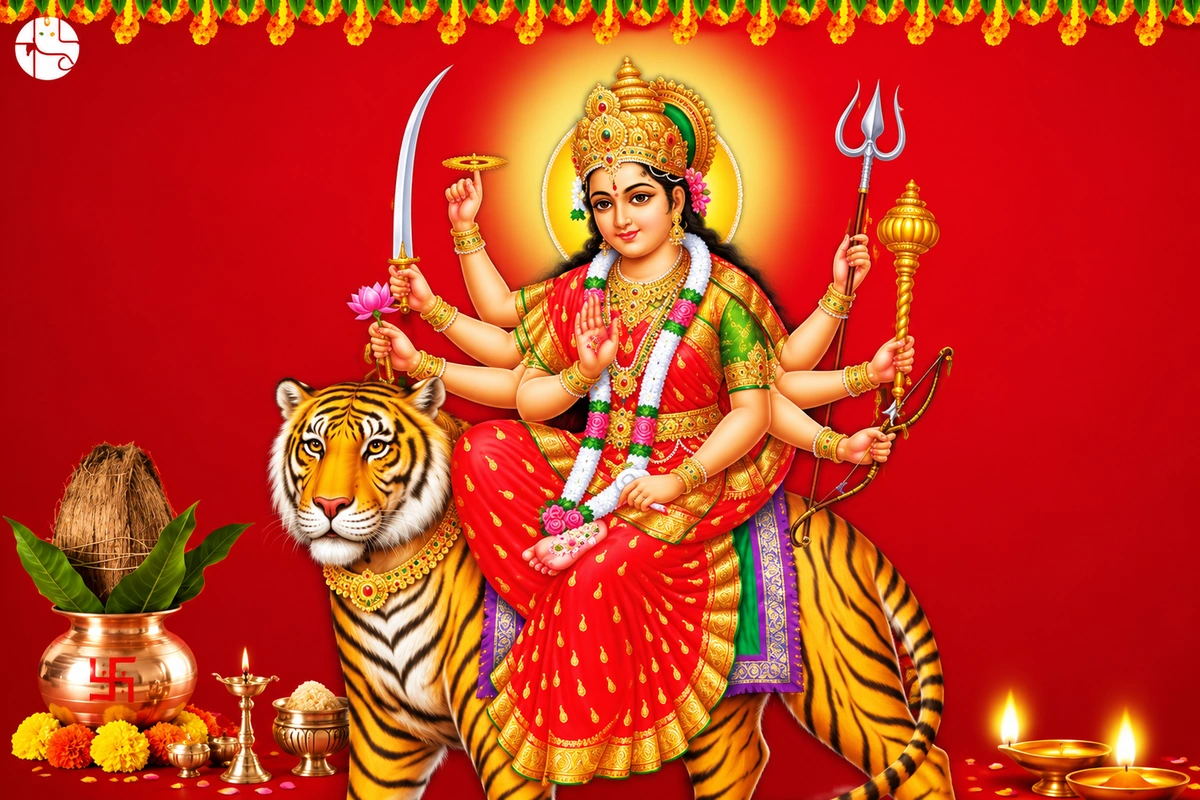
Garba and Dandiya Raas are performed on the nine nights of Shardiya Navratri, from 11 October 2026 until Vijayadashami on 20 October, in honour of Goddess Durga. Beyond celebration, they express devotion to Shakti and bring communities together, as days of prayer and fasting turn into evenings of Garba and Dandiya.
Navratri is probably the most energetic and devotional festival in India. It is a nine-day long festival honouring Goddess Durga as well as the divine force, Shakti. Garba and Dandiya Raas are an important part of the festival, which is celebrated in addition to prayers, fasting, and traditional rituals.
These styles of dancing are based out of the state of Gujarat and people here perform in large numbers dressed up beautifully, and dance to devotional music. Garba and Dandiya are not just for entertainment though. They have some deeper spiritual and cultural significance too.
Navratri and the Celebration of Goddess Durga
Navratri is dedicated to goddess Durga and her victory over the demon Mahishasura. Navratri symbolizes the victory of Dharma (religion) over Asura (evil), arrogance and destructive forces.
It also unites communities. While Goddess Durga is worshiped by devotees through prayers, Puja, Aarti and rituals like growing Jware, evenings thrive with the beats of Garba and Dandiya.
Getting the blessings of Goddess Durga on the occasion of Navratri is very good from the Vedic point of view. Devotees believe that by worshipping Durga Puja and Aarti, only good luck can be obtained, enemies and obstacles can be defeated and strength can be obtained.
Shardiya Navratri 2026 Calendar: Dates, Goddesses and Colours
| Day | Date | Tithi | Goddess | Colour |
|---|---|---|---|---|
| Day 1 | Sunday, 11 Oct 2026 | Pratipada (Ghatasthapana) | Maa Shailputri | Orange |
| Day 2 | Monday, 12 Oct 2026 | Dwitiya | Maa Brahmacharini | White |
| Day 3 | Tuesday, 13 Oct 2026 | Tritiya | Maa Chandraghanta | Red |
| Day 4 | Wednesday, 14 Oct 2026 | Chaturthi | Maa Kushmanda | Royal Blue |
| Day 5 | Thursday, 15 Oct 2026 | Panchami | Maa Skandamata | Yellow |
| Day 6 | Friday, 16 Oct 2026 | Shashthi | Maa Katyayani | Green |
| Day 7 | Saturday, 17 Oct 2026 | Saptami (Maha Saptami) | Maa Kaalratri | Grey |
| – | Sunday, 18 Oct 2026 | Saptami continues; Ashtami begins 08:29 AM | – | – |
| Day 8 | Monday, 19 Oct 2026 | Ashtami (Durga Ashtami) | Maa Mahagauri | Purple |
| Day 9 | Tuesday, 20 Oct 2026 | Navami (Maha Navami) | Maa Siddhidatri | Peacock Green |
| Dussehra | Tuesday, 20 Oct 2026 | Dashami begins 12:51 PM | Vijayadashami | – |
Are You Facing any Problems in Life? So, this is the right time to Connect with our Astrologer on Chat and remove your obstacles. First Chat Free!
What Sets Garba Apart From Dandiya?
Though both the dance forms are linked with Navratri celebrations, Garba and Dandiya are different dances.
Garba is usually played by moving the hands and legs in a circular motion. Dandiya Raas is local to Vrindavan and was later adopted by the people of Gujarat as part of their Navratri celebration. The most distinctive aspect of this dance are the coloured sticks.
The sequence of the dances is also quite different. Garba is generally performed prior to the worship rituals and Aarti whereas Dandiya takes place after the rituals and Aarti.
What Happens During a Garba and Dandiya Celebration?
Costumes are integral to the festival. Women can be seen in vibrant, embroidered Chaniya Cholis, and men in kurta-pyjamas or traditional Gujarati Indian outfits like Kediyu and Dhoti. Oxidised jewellery and other ornaments complete the festive look.
Friends and families sometimes go to Garba together as a group and are particular about matching colours, patterns or designs of their Garba dresses.
These festivities are for all age groups. Children, teenagers and adults assemble at open grounds and various other places to dance, worship Durga Maa and enjoy the enthusiasm during Navratri.
How Garba and Dandiya Celebrations Have Spread Beyond Gujarat
Previously, Garba and Dandiya were known to be the part of Gujarat only. But now, the popularity of the dance is at another level. Now, these programs are conducted in India and other parts of the world as well.
Celebrations can see hundreds of people coming together, with open spaces and festival venues turning into vibrant scenes of music and devotion.
Spiritual Significance of Garba and Dandiya
The symbolic aspect attached to these dances adds a deeper dimension to Navratri celebrations. The dance form Dandiya is believed to represent the fight between Goddess Durga and Mahishasura. The brightly coloured Dandiya sticks are said to represent the swords or weapons of Goddess Durga, hence Dandiya is often also known as the ‘Sword Dance’.
Participants dance and beat their sticks to the Dhol’s beat, creating a lively visual of the battle.
Garba has a different yet equally meaningful significance. It is done in a circle around an image of Goddess Durga or around a pot with a lamp in it. That lamp signifies life, much like life sprouting inside a mother’s womb.
The circular shape in itself holds spiritual meaning. The circle, as dancers keep rotating around the centre, signifies the cycle of life, death and rebirth. Goddess Durga stays fixed at the centre, the eternal divine power that exists beyond the cycle.
How Garba and Dandiya Have Evolved
With time, these traditions have spread all across the world including countries like the USA, UK, Canada, Australia, UAE, New Zealand, etc. Today, these dances and traditions are famous far and wide.
While today’s Garba blends contemporary music styles with traditional Garba rhythms and Bollywood tunes (to appeal to the youth), it still largely revolves around Goddess Durga. It brings the people together as one, through music, dance and devotion.
Will 2027 be a year of strength or stress? Get Your Detailed Report Now!
FAQs
Why is Dandiya played during Navratri?
Dandiya is played during Navratri as a form of celebration honoring Goddess Durga and the divine force, Shakti. It symbolizes the victory of Dharma over evil and unites communities through dance and music.
What is the significance of Garba in Navratri?
Garba is significant in Navratri as it is performed prior to worship rituals and Aarti. It is a devotional dance that celebrates the divine feminine energy and brings communities together in a circular motion dance.
How do Garba and Dandiya differ?
Garba and Dandiya differ in their sequence and style. Garba is performed before the worship rituals, while Dandiya takes place afterward. Garba involves circular hand and leg movements, whereas Dandiya uses colored sticks.
What are the traditional costumes worn during Garba and Dandiya?
During Garba and Dandiya, women typically wear vibrant, embroidered Chaniya Cholis, and men wear traditional Gujarati outfits like Kediyu and Dhoti. Oxidised jewellery and ornaments complete the festive look.
How has the popularity of Garba and Dandiya spread beyond Gujarat?
Initially popular in Gujarat, the popularity of Garba and Dandiya has spread across India and globally. These dance forms are now celebrated in various parts of the world, turning festival venues into vibrant scenes of music and devotion.