



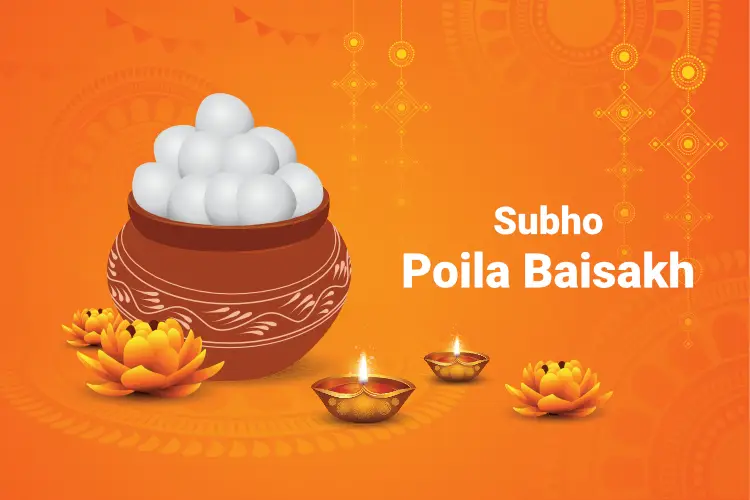
Poila Baisakh (Pohela Boishakh), the Bengali New Year, falls on Thursday, 15 April 2027 in West Bengal, the day after Mesha Sankranti (3:33 PM on 14 April), and marks the start of Bangabda 1434. Bangladesh observes it on its fixed date, Wednesday, 14 April. Bengalis greet each other with “Shubho Noboborsho”, worship Lord Ganesha and Goddess Lakshmi, take part in Prabhat Pheri processions, and enjoy a feast of luchi, ilish and mishti. Traders open new account books in the Haal Khata ritual.
Poila Baisakh is the Bengali New Year. According to the Bengali calendar, it is not only the first day of the year, but it is also an emotion. Bengalis celebrate it with great joy. The atmosphere begins to set with the arrival of ‘Chaitra,’ the final month of the Bengali calendar. When we step down the lanes and by-lanes of every Bengali housing or colony, we get the impression that a new beginning is beckoning. This day in April represents a fresh start for most families, which Bengalis eagerly look forward to.
The famous Bengali Poila is celebrated on the first day of the first month of the Bengali calendar, which is known as Boishakh. Every year in mid-April, Bengalis around the world celebrate this festival. In 2027, it marks the start of Bangabda 1434.
From a profitable company to retaining healthy relationships, everybody is out to reach and refresh current relationships. Often, since it is a New Year, they aim to cut all bad ties and cancel all pending financial obligations during this period.
Read 2027 Detailed Month-Wise Report to Learn More About the Various Aspects of Your Life in 2027.
Significance Of Poila Baisakh
Since it is the harvest season, people pray to Lord Ganesha and Goddess Laxmi for God’s blessings on their lives and households.
Many prayers are chanted on this day because people believe it will bring them peace, good health, long life and stability. After the prayers, it is considered an auspicious day to start new businesses and even pay off old debts. They agree that the first day of the month should be celebrated appropriately and that the rest of the year will be perfect.
Mughal Emperor Akbar introduced the Bengali calendar in 1584. The aim of creating a new calendar for the city was to collect taxes. The Bengali calendar is unusual in that it combines the Hindu Solar Calendar with the Hijri lunar calendar.
Download Your Online Free Janam Kundali Now and Plan Your Future Smartly!
Poila Baisakh 2027: Date & Timing
In 2027, Poila Baisakh will be celebrated in West Bengal on Thursday, 15 April, the day after Mesha Sankranti (03:33 PM on 14 April). In Bangladesh, Pohela Boishakh is observed on a fixed date, 14 April. This year, it coincides with Ram Navami and Vishu. On this day, Bengalis greet each other with “Shubho Noboborsho” (Happy New Year). The month of Baisakh is considered to be very favourable in Bengal. All good works such as marriage, marriage, entrance to the home, grooming, shopping are completed at this moment. Fairs in several places of Bengal are also held on this day.
| Event | Date & Time |
|---|---|
| Poila Baisakh 2027 (West Bengal) | Thursday, 15 Apr 2027 |
| Mesha Sankranti Moment | 03:33 PM, Wednesday, 14 Apr 2027 |
| Pohela Boishakh 2027 (Bangladesh) | Wednesday, 14 Apr 2027 |
| Bengali Year (Bangabda) Begins | 1434 |
Rituals To Be Followed During Poila Baisakh
The day begins in the morning with believers offering prayers to the rising Sun, which is considered auspicious.
Following that, a religious procession is held, and these morning processions are known as Prabhat Pheri. In Dhaka, the grand Mangal Shobhajatra procession is listed by UNESCO as Intangible Cultural Heritage (2016). This is well worth seeing! Garad sarees (white or off-white with a red border), which women wear, are a one-of-a-kind outfit. These sarees are white with bright red borders. They wear fresh flowers in their hair. Women adorn themselves with oversized gold earrings and heavy gold jewellery. They seem graceful, and several white pearls complement them. Men wear traditional kurtas and dhotis, which are primarily white. Following the parade, the men and women sing and dance to a variety of popular folk songs. Aside from that, the women in the households cook lavish meal. The feast includes rice, fish curry such as ilish (hilsa), luchi, payesh and a variety of mishti (sweets). Alpana (traditional rice-paste art) is drawn at home and often in front of the house, and this tradition continues to this day. The remainder of the day is spent meeting friends and consuming and enjoying delicious meals.
Cultural programmes fill the evenings of the special day. From folk songs to skits to traditional theatre performances, there is something for all.
If You’re in a Relationship, Read the 2027 Love Life Report to Learn About Your Love Life in 2027….
Panjika-Bengali Almanac on Poila Baisakh
Bengalis scramble to get their hands on a copy of Panjika before the launch of the Bengal New Year, Poila Baisakh. Panjika is a Bengali almanac, a year-long handbook that will help you find festival timings, auspicious dates and times for anything from weddings to house warming, Horoscopes, beginning a trip, launching a company, and more. Panjikas are an important part of the Poila Baisakh celebrations in India and Bangladesh and among Bengali communities around the world. The most well-known among Bengalis is Benimadhab Seal’s Panjika. Don’t forget to check our daily Panchang.
Gifts on Poila Baisakh-Bengali New Year
At the Poila Baisakh festival, people dress up in new clothes and share sweets with friends and family. Young people prostrate themselves at the foot of elders, seeking their blessings. To win love, loved ones give presents and greeting cards. Traditional handicrafts are the best because they are both eco-friendly and attractive ways to decorate your house. People pay visits to their families, mates, and loved ones to wish them “Shubho Nobo Borsho” (Happy New Year).
Bring prosperity to your family today with an authentically attuned Lakshmi Ganesha Yantra.
Shubho Poila Baisakh/Happy Poila Baisakh
On the auspicious day of Poila Baisakh, pray to Lord Ganesha first and recite the Poila Baisakh mantra:
“Om Shreem Hreem Kleem Glaum Gam Ganapataye Vara Varada Sarvajanam Me Vashamanaya Thah Thah.”
On Poila Baisakh-Bengali New Year, recite the Rinn Harta Mantra:
“Om Ganesh Rinam Chhindhi Varenyam Hum Namah Phat” to stay debt-free during the Bengali New Year.
Chant the Shaktivinayak Mantra:
“Om Hreeng Greeng Hreeng” to attract happiness, good luck, financial progress, and prosperity during the Bengali New Year. On Poila Boishakh-Bengali New Year, Ganesha wishes “Shubho Noboborsho!” (Happy New Year!)
Attract Good Luck With Your Personalised Horoscope On The Auspicious Day Of Poila Baisakh! – Talk To an Expert Astrologer Now!
With Ganesha’s Grace,
The GaneshaSpeaks.com Team
Astrologers trained by Shri Bejan Daruwalla.
FAQs
What is the significance of Poila Baisakh?
Poila Baisakh marks the Bengali New Year and is a time for new beginnings. It is celebrated with great enthusiasm as it symbolizes a fresh start, where people aim to renew relationships and settle financial obligations. It is also a time for cultural celebrations and religious activities.
When is Pohela Boishakh celebrated in 2027?
Pohela Boishakh will be celebrated on April 15, 2027. It is the first day of the Bengali calendar and is observed by Bengalis worldwide.
What traditional activities are associated with Poila Baisakh?
Traditional activities during Poila Baisakh include wearing new clothes, participating in cultural parades like Prabhat Pheris, performing prayers, and enjoying lavish meals. People also exchange sweets and gifts and seek blessings from elders.
What is Haal Khata and how is it related to Poila Baisakh?
Haal Khata is a traditional Bengali ceremony where traders and shopkeepers close their old ledgers and open new ones on Poila Baisakh. This practice is believed to bring prosperity and is an integral part of the New Year celebrations.
Why is the Panjika important during Poila Baisakh?
The Panjika is a Bengali almanac that provides important information on festival timings, auspicious dates, and times for various activities. It is highly sought after during Poila Baisakh as it guides people in planning events and ceremonies throughout the year.