



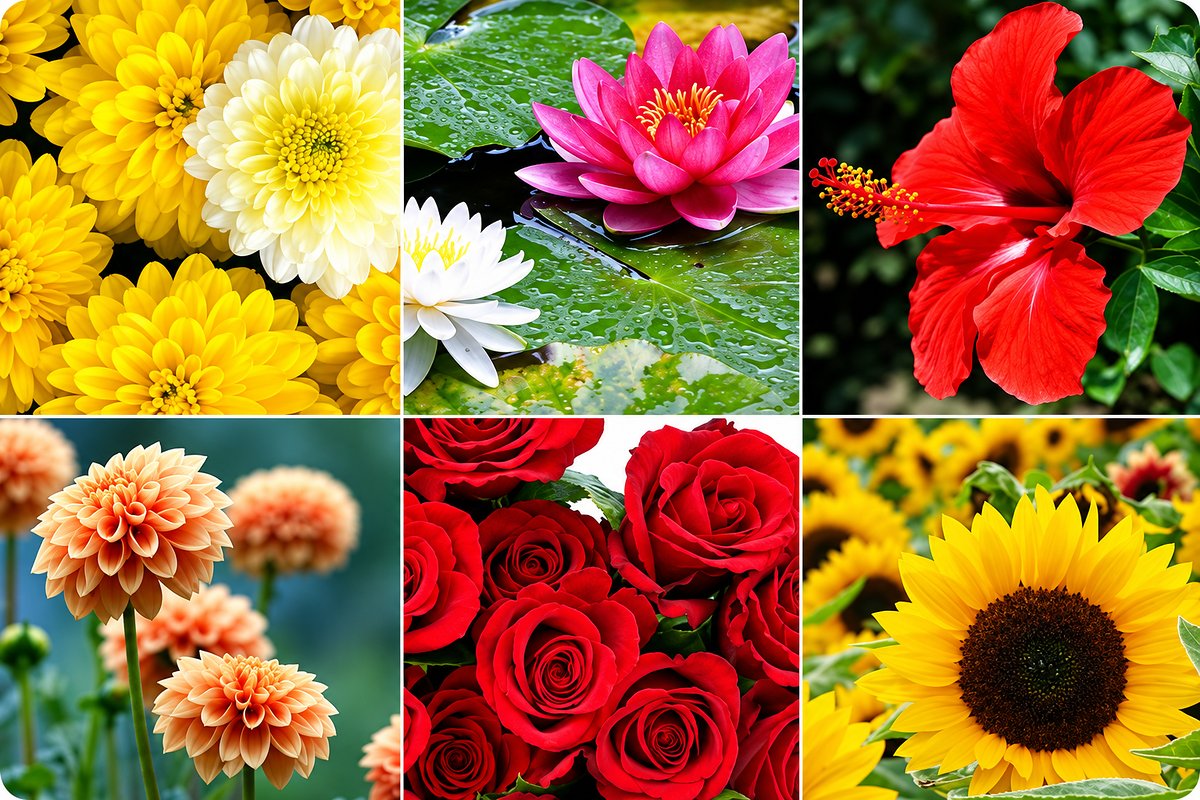
During Shardiya Navratri (11–20 October 2026), a specific flower is offered to each form of Goddess Durga, such as the lotus for Maa Chandraghanta (13 October), Jui for Maa Kushmanda (14 October), rose for Maa Skandamata (15 October) and jasmine for Maa Katyayani (16 October). Offer fresh, fully bloomed flowers, in ones or multiples of nine.
Flowers have always been a part of the Hindu puja. The freshness, sweet smell, and natural beauty of flowers make them more suitable to be offered to God. During Navratri, flower offerings have a greater impact as Devi Durga is worshiped for nine sacred days in her nine different forms.
Traditionally, a specific flower is recommended for the worship of each of the nine forms of Navdurga. Offering this flower is a simple and effective way of seeking the blessings of the Goddess.
So, which flower should you give on each day of Navratri? Here is the traditional day-by-day guide.
Which Flowers Should You Offer During the Nine Days of Navratri?
Each day of Navratri honours a different manifestation of Goddess Durga. Devotees can offer the following flowers during their daily Puja, along with the traditional prasad for each Goddess:
Day 1 – Goddess Shailputri: Hibiscus or Shoe Flower
The first day of Navratri commences with the worship of Maa Shailputri. Shoe flower, or hibiscus, is offered to the Goddess on the very first day.
Day 2 – Goddess Brahmacharini: Shevanti
The second day belongs to Maa Brahmacharini. Shevanti flowers are considered suitable for her worship and can be placed before the deity during Puja.
Day 3 – Goddess Chandraghanta: Lotus
The third day of worship is dedicated to Maa Chandraghanta and Lotus flowers are offered during the puja on this day.. The Lotus is regarded as one of the most revered flowers in Hindu culture.
Day 4 – Goddess Kushmanda: Jui
The fourth day honours Maa Kushmanda. Jui flowers are traditionally associated with her worship and may be included among the day’s Puja offerings.
Day 5 – Goddess Skandamata: Rose
On Panchami, devotees worship Maa Skandamata. Rose is the traditional flower offered to this form of Goddess Durga.
Day 6 – Goddess Katyayani: Jasmine
The sixth day is dedicated to Maa Katyayani. Jasmine, known for its distinctive fragrance and delicate appearance, is offered during her worship.
Day 7 – Goddess Kalaratri: Krishnakamal
Maa Kalaratri is worshipped on the seventh day of Navratri. Krishnakamal is traditionally associated with her Puja.
Day 8 – Goddess Mahagauri: Mogra
Ashtami is dedicated to Maa Mahagauri. Mogra is considered an appropriate floral offering while seeking her blessings.
Day 9 – Goddess Siddhidatri: Chapa
Navratri’s ninth day honours Maa Siddhidatri. Chapa flowers are traditionally offered to the Goddess, completing the nine-day sequence of floral offerings.
Issue or Problems in Your Life? Click Here and Get First Free Online Astrologer Chat at GaneshaSpeaks
Shardiya Navratri 2026 Calendar: Dates, Goddesses and Colours
| Day | Date | Tithi | Goddess | Colour |
|---|---|---|---|---|
| Day 1 | Sunday, 11 Oct 2026 | Pratipada (Ghatasthapana) | Maa Shailputri | Orange |
| Day 2 | Monday, 12 Oct 2026 | Dwitiya | Maa Brahmacharini | White |
| Day 3 | Tuesday, 13 Oct 2026 | Tritiya | Maa Chandraghanta | Red |
| Day 4 | Wednesday, 14 Oct 2026 | Chaturthi | Maa Kushmanda | Royal Blue |
| Day 5 | Thursday, 15 Oct 2026 | Panchami | Maa Skandamata | Yellow |
| Day 6 | Friday, 16 Oct 2026 | Shashthi | Maa Katyayani | Green |
| Day 7 | Saturday, 17 Oct 2026 | Saptami (Maha Saptami) | Maa Kaalratri | Grey |
| – | Sunday, 18 Oct 2026 | Saptami continues; Ashtami begins 08:29 AM | – | – |
| Day 8 | Monday, 19 Oct 2026 | Ashtami (Durga Ashtami) | Maa Mahagauri | Purple |
| Day 9 | Tuesday, 20 Oct 2026 | Navami (Maha Navami) | Maa Siddhidatri | Peacock Green |
| Dussehra | Tuesday, 20 Oct 2026 | Dashami begins 12:51 PM | Vijayadashami | – |
Why Are Flowers Offered to Goddess Durga During Navratri?
In Hindu Ceremonies or pujas, ‘offering’ is not merely an object that is put in front of a god. It represents the Bhava of the devotee – the emotion behind the prayer.
Flowers are also signs of purity and delicacy by nature. During Navratri flowers are also offered to the nine forms of the Goddess – to pay homage to each of the nine goddesses and to celebrate her individual divine power.
It also associates nature with Puja. Rather than relying on expensive offerings, a single fresh flower, offered with love and admiration, is sufficient to show devotion.
How Should Flowers Be Offered During Navratri Puja?
Select fresh flowers that are fully bloomed, and do not opt for broken, torn or wilted ones. Nowadays, the devotees offer either one single flower or in multiples of nine. Offer the flower with folded hands while chanting the mantra of the day’s Goddess.
Another good rule to remember is to never smell a flower that you are offering to the Goddess. The thought behind this is pretty simple: if you wish to offer the Goddess a flower it is in your best interest to give it to her before you find out how good it smells.
These small practices help maintain the sense of purity and respect associated with Navratri Puja.
Will 2027 be a year of strength or stress? Get Your Detailed Report Now!
Why Is the Lotus So Important in Navratri Worship?
Of all the flowers that are used as offerings to Gods in the form of rituals in Hinduism, Lotus has its own special place.
The symbolic strength of the lotus can be understood through its association with purity, prosperity, beauty and fertility. Lotus grows in muddy waters yet rises above to blossom in a beautiful way. This quality has made it a very powerful spiritual symbol, the ability to remain internally.
The flower is also associated with Sattva Guna, which represents purity, harmony, goodness and clarity.
Lotus is very much closely linked to the following Goddesses of Hinduism. Goddess Durga is sometimes depicted with a garland of lotus flowers. Goddess Saraswati is associated with the white lotus. Goddess Lakshmi is often depicted seated on a fully blossomed lotus and holding a lotus flower in her hand.
FAQs
What is the significance of flowers during Navratri?
Flowers play a significant role in Hindu traditions and are a powerful medium of communication with the Gods. During Navratri, offering specific flowers to the nine Goddesses holds special importance as each Goddess has her own favorite flower.
Which flower is associated with Goddess Lakshmi during Navratri?
Goddess Lakshmi is associated with the lotus flower. She is often depicted sitting on a full-bloomed lotus and holding a lotus in her right hand, symbolizing prosperity, beauty, and fertility.
How does the lotus flower symbolize in Hindu spiritualism?
In Hindu spiritualism, the lotus flower symbolizes higher knowledge, greater virtues, and represents salvation and liberation from the mortal bonds of the material world. It is a prominent symbol of Satva Guna.
Who can provide astrological guidance during Navratri?
Acharya Aditya, a renowned Vedic astrologer with over 30 years of experience, can provide astrological guidance during Navratri. He specializes in accurate date-wise predictions and offers insights on career, marriage, and other life aspects.
What is the Mahamrutyanjay Yantra used for during Navratri?
The Mahamrutyanjay Yantra is used to generate positive vibrations and eliminate negativity during Navratri. It is considered an ultimate tool for inviting positivity into one’s life.