






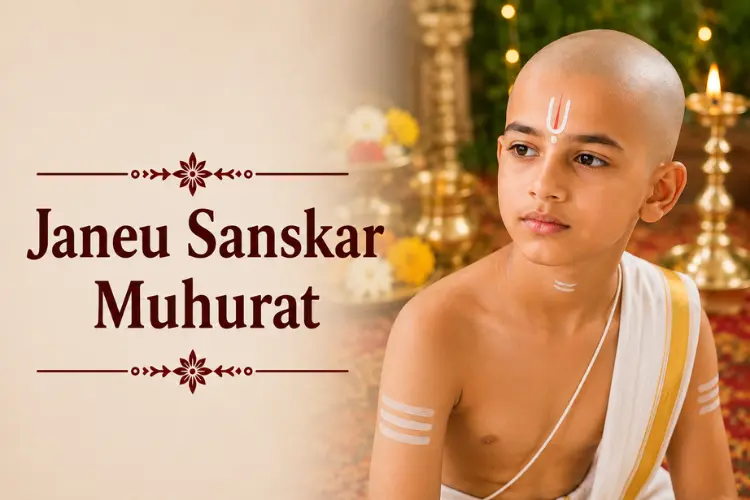
Among the many rituals followed in Hinduism, Janeu (Upanayana Sanskar) holds immense significance, even before marriage. It is regarded as the tenth sanskar mentioned in the ancient Sanatan Hindu Dharma. In this ceremony, the boy is adorned with the sacred white thread (Janeu) and performs several rituals. This sanskar is observed by various communities, primarily Brahmins and Kshatriyas.
The term “Upanayana” is derived from two parts: “Up,” meaning near, and “Nayana,” meaning vision. Symbolically, it represents the transition from the darkness of ignorance to the light of spiritual knowledge. This is why it is considered one of the most respected and revered rites in Hindu tradition. In this text, we will explore the auspicious muhurats (timings) for the Upanayana Sanskar in 2027, also known as the Thread ceremony. This information will help you prepare for this sacred ritual.
Traditionally, Brahmins, Kshatriyas, and Vaishyas conduct this threading ritual for boys, often before marriage. The practice is also known as Yagnopavitra. According to the scriptures, everyone in Hinduism-except Shudras-is entitled to wear the sacred thread and perform this ritual.
Muhurat windows shift with local sunrise, so timings will differ in your city.
Upanayana Sanskar Muhurat in January 2027
| Date | Day | Muhurat Time |
|---|---|---|
| 19 Jan 2027 | Tuesday | 7:50 AM – 4:00 PM |
| 26 Jan 2027 | Tuesday | Full Day – 4:00 PM |
Upanayana Sanskar Muhurat in February 2027
| Date | Day | Muhurat Time |
|---|---|---|
| 08 Feb 2027 | Monday | 9:50 AM – 4:00 PM |
| 09 Feb 2027 | Tuesday | 5:00 AM – 11:15 AM |
| 16 Feb 2027 | Tuesday | 10:50 AM – 4:00 PM |
| 21 Feb 2027 | Sunday | 1:55 PM – 5:15 PM |
| 22 Feb 2027 | Monday | 8:15 AM – 11:45 AM |
| 25 Feb 2027 | Thursday | 5:00 AM – 9:30 AM |
Upanayana Sanskar Muhurat in March 2027
| Date | Day | Muhurat Time |
|---|---|---|
| 10 Mar 2027 | Wednesday | 5:00 AM – 10:45 AM |
| 11 Mar 2027 | Thursday | 11:30 AM – 4:00 PM |
Upanayana Sanskar Muhurat in April 2027
| Date | Day | Muhurat Time |
|---|---|---|
| 08 Apr 2027 | Thursday | 7:18 AM – 8:31 AM |
| 08 Apr 2027 | Thursday | 10:27 AM – 12:41 PM |
| 15 Apr 2027 | Thursday | 1:51 PM – 2:34 PM |
| 25 Apr 2027 | Sunday | 10:15 AM – 11:35 AM |
| 25 Apr 2027 | Sunday | 1:55 PM – 2:41 PM |
Upanayana Sanskar Muhurat in May 2027
| Date | Day | Muhurat Time |
|---|---|---|
| 09 May 2027 | Sunday | 6:29 AM – 8:25 AM |
| 09 May 2027 | Sunday | 9:26 AM – 9:33 AM |
| 10 May 2027 | Monday | 8:21 AM – 9:19 AM |
| 10 May 2027 | Monday | 12:56 PM – 3:13 PM |
| 17 May 2027 | Monday | 7:53 AM – 10:08 AM |
| 17 May 2027 | Monday | 10:08 AM – 11:59 AM |
| 17 May 2027 | Monday | 12:28 PM – 2:46 PM |
| 23 May 2027 | Sunday | 7:30 AM – 8:12 AM |
Upanayana Sanskar Muhurat in June 2027
| Date | Day | Muhurat Time |
|---|---|---|
| 07 Jun 2027 | Monday | 6:31 AM – 8:45 AM |
| 07 Jun 2027 | Monday | 11:06 AM – 1:23 PM |
| 09 Jun 2027 | Wednesday | 6:23 AM – 8:38 AM |
| 09 Jun 2027 | Wednesday | 8:38 AM – 10:05 AM |
| 13 Jun 2027 | Sunday | 9:35 AM – 10:42 AM |
| 13 Jun 2027 | Sunday | 10:42 AM – 1:00 PM |
| 14 Jun 2027 | Monday | 6:03 AM – 8:15 AM |
| 20 Jun 2027 | Sunday | 10:15 AM – 12:32 PM |
Now that you know about Upnayan Sanskar Muhurats, let’s look at why they’re significant and how the rituals are done.
Janeu Ceremony: Significance and Rituals
Every Hindu ritual carries deep spiritual meaning, and the Janeu Sanskar (Upanayan Sanskar) is no exception. This sacred thread ceremony symbolizes a boy’s transition from childhood to spiritual adolescence. During the ritual, a priest places a sacred thread-called Janeu-over the boy’s left shoulder and under his right arm. This thread is woven from three strands, each representing multiple layers of spiritual and worldly duties.
Symbolism of the Janeu
- Three Threads: Signify the trinity of Brahma, Vishnu, and Mahesh, along with the three debts of life-Devaruna (towards gods), Pitruruna (towards ancestors), and Rishiruna (towards sages).
- Additional Beliefs: Some traditions interpret the threads as symbols of Sattva, Rajas, and Tamas (the three gunas), the three steps of the Gayatri Mantra, and the three ashrams of life. In the final Sannyas stage, the Yajnopavita (Janeu) is removed.
- Nine Chords: Each of the three main threads is made up of three smaller ones, creating a total of nine cords.
- Five Knots: Represent Brahma, Dharma, Artha, Kama, and Moksha, and also align with Panchakarma, the five senses of knowledge, and the five Yajnas.
- Length: The thread measures 96 finger-widths, reminding the wearer to master 64 arts and 32 disciplines, including the four Vedas, four Upvedas, six Darshanas, six Agamas, three Sutras, and nine Aranyakas.
Wearing the Janeu
During the ceremony, the boy wears only a single piece of unstitched yellow cloth around the neck and holds a staff (danda). The sacred thread is donned after Guru Diksha and is replaced whenever it becomes impure.
Connection to the Gayatri Mantra
The ritual begins with the recitation of the powerful Gayatri Mantra, which unfolds in three stages:
- Tatsavitur Varenyam
- Bhargo Devasya Dhimahi
- Dhiyo Yo Nah Prachodayat
Mantra for Janeu Sanskar:
यज्ञोपवीतं परमं पवित्रं प्रजापतेर्यत्सहजं पुरस्तात् ।
आयुष्यमग्रं प्रतिमुञ्च शुभ्रं यज्ञोपवीतं बलमस्तु तेजः।।
Step-by-Step Janeu Sanskar Vidhi
The Janeu Sanskar is performed during an auspicious Upanayan Sanskar Muhurat and follows these steps:
- Mundan (Head Shaving): The boy’s head is shaved, leaving a small braid.
- Purification: On the muhurat day, he bathes and is anointed with sandalwood paste while preparations for the havan begin.
- Ganesh Puja & Yagna: Wearing only a simple lower garment, the boy worships Lord Ganesha and participates in the Yagna.
- Gayatri Chanting: The family chants the Gayatri Mantra 10,000 times to invoke divine blessings.
- Vow of Discipline: The boy pledges to follow the teachings of the Shastras and observes a fast.
- First Meal: He eats Churma with peers and bathes again.
- Initiation: A senior family member recites the Gayatri Mantra, declaring him a Brahmin from that day forward.
- Sacred Symbols: The boy receives a staff (danda), and the Mekhala and Kandora (sacred girdles) are tied around him.
- Bhiksha Tradition: He seeks alms from relatives as a mark of humility.
- Symbolic Journey: After dinner, he symbolically “leaves for Kashi” to study, returning after being coaxed back, often with the promise of marriage.
Rules for Janeu Sanskar
- A proper Yagna must be performed at the auspicious muhurat.
- The boy should wear unstitched yellow cloth and wooden slippers (khadau) and hold a danda.
- The Janeu itself must be yellow and worn throughout Guru Deeksha.
- Recommended ages: 8 years for Brahmins, 11 years for Kshatriyas, and 12 years for Vaishyas.
Which planetary period can transform your future? Discover Today
FAQs
What is the significance of the Upanayana Sanskar?
The Upanayana Sanskar, also known as the Janeu Sanskar, is a significant Hindu ritual symbolizing a boy’s transition from childhood to spiritual adolescence. It involves wearing a sacred thread called Janeu, representing spiritual and worldly duties.
When are the auspicious muhurats for Upanayana Sanskar in 2027?
The auspicious muhurats for the Upanayana Sanskar in 2027 vary and are determined based on local sunrise timings. It is important to consult a local astrologer or refer to a trusted source for accurate dates and timings.
Who traditionally performs the Upanayana Sanskar?
Traditionally, the Upanayana Sanskar is performed by Brahmins, Kshatriyas, and Vaishyas for boys, often before marriage. It is a rite of passage marking the beginning of the boy’s educational journey.
What rituals are involved in the Upanayana Sanskar?
The Upanayana Sanskar involves several rituals, including the recitation of the Gayatri Mantra, wearing a single piece of unstitched yellow cloth, holding a staff, and the priest placing the sacred thread over the boy’s left shoulder and under his right arm.
What does the sacred thread in the Upanayana Sanskar represent?
The sacred thread, or Janeu, worn during the Upanayana Sanskar, is woven from three strands. Each strand represents different layers of spiritual and worldly duties, symbolizing the boy’s commitment to spiritual growth and responsibility.