








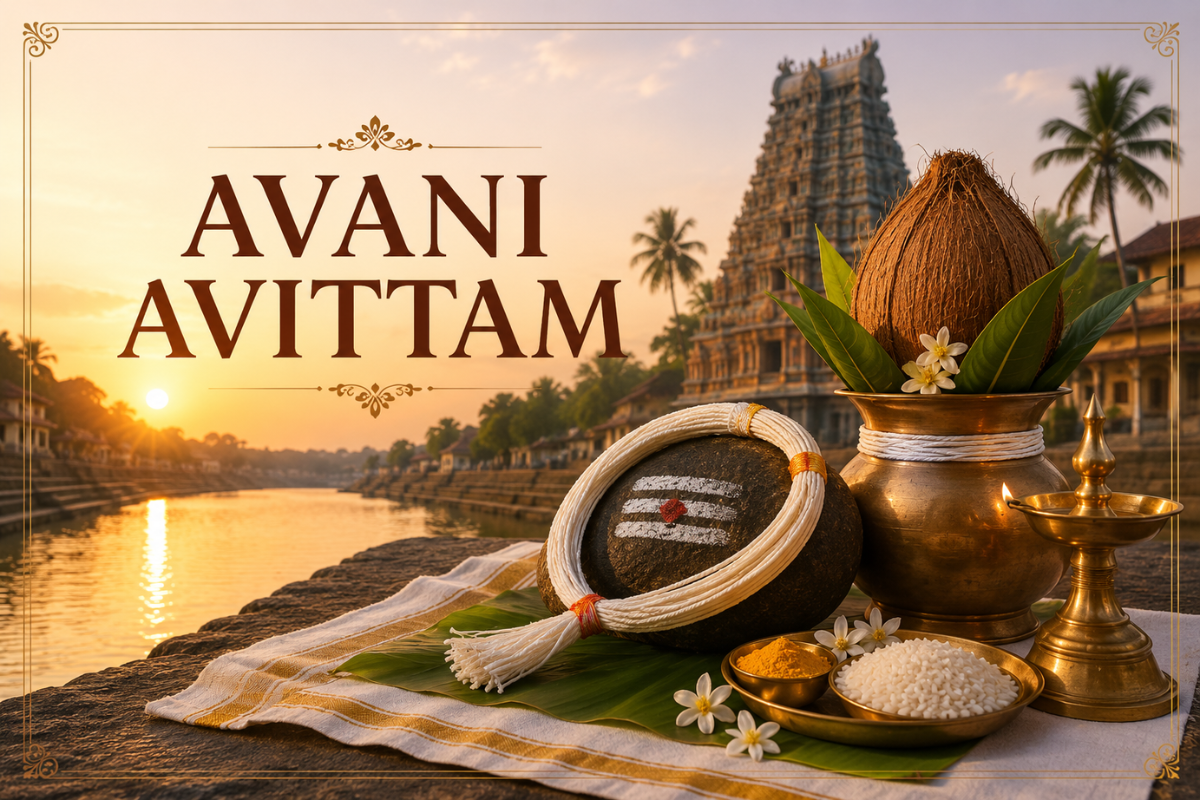
Avani Avittam is more than a sacred-thread ceremony. For thousands of Brahmin families, it is a yearly ritual of renewal, remembrance and recommitment to Vedic learning. Observed during the Shravan month, the festival marks an important day in the Hindu calendar, particularly for those who follow the Upakarma tradition. In 2026, Avani Avittam will be observed on August 27, Thursday for Yajurveda Upakarma, according to the traditional calendar.
The observance involves changing the sacred thread, performing Vedic rituals and seeking forgiveness for lapses in one’s religious duties. While the rituals differ according to Vedic tradition and region, the central idea remains the same: renewing one’s spiritual commitment and continuing the lineage of Vedic knowledge.
Avani Avittam 2026 Date and Timings
Avani Avittam is observed on Shravana Nakshatra, Shravana Purnima, or Hasta Nakshatra during Bhadrapada, depending on the tradition followed. The exact rituals and timings can vary depending on the community and Vedic branch followed. Avani Avittam 2026 falls on Thursday, 27 August 2026 for Yajurveda followers.
Purnima Tithi begins: 09:08 AM, Thursday, 27 August 2026
Purnima Tithi ends: 09:48 AM, Friday, 28 August 2026
Avani Avittam 2026 Dates by Veda
Yajur Veda Avani Avittam 2026: Thursday, 27 August 2026. Observed as Yajur Upakarma on Shravana Purnima, this is the observance most people mean by Avani Avittam and the one followed across Tamil Nadu.
Rig Veda Avani Avittam 2026: Wednesday, 26 August 2026. Rigveda Upakarma is fixed to Shravana Nakshatra rather than the full Moon, which is why it lands a day earlier this year.
Sama Veda Avani Avittam 2026: Saturday, 12 September 2026. Samaveda Upakarma follows Hasta Nakshatra in Bhadrapada, placing it more than a fortnight after the other two.
Gayatri Japam 2026: Friday, 28 August 2026, observed the day after Yajur Upakarma.
Because the Veda, Shakha and family Sutra all affect the date, a generic online muhurat may not apply to your household. Devotees should follow their local Panchang and the customs of their respective Shakha before performing the ceremony.
What is Avani Avittam?
Avani is the Tamil solar month corresponding to mid-August to mid-September, and Avittam is the nakshatra (Dhanishta) under which the ritual falls. The day coincides with Hayagriva Jayanti, honouring the form of Vishnu believed to have restored the Vedas.
Upakarma refers to starting or resuming Vedic study. This means that Avani Avittam is closely related to the Vedic cycle of reading and recitation.
The most evident ritual involves changing the Yajnopavita or the sacred thread. However, the ceremony does not refer to merely changing the thread. The sacred thread signifies a person’s readiness to perform duties, be disciplined, and undertake spiritual studies. Moreover, changing the thread includes prayers, Sankalp, and rituals meant to cleanse past wrongdoings and give an individual the chance of studying again.
This festival particularly belongs to the Brahmin communities that speak Tamil, Telugu, Kannada and Malayalam languages, although Upakarma rites are held in varying forms in different parts of India.
Why is Avani Avittam Celebrated?
Avani Avittam carries both ritual and educational significance. Traditionally, this day marks a new relationship with the Vedas and all duties relating to the study and safeguarding of sacred knowledge.
The observance of this occasion is also associated with Rishi Tarpanam which connects those who perform it to those sages who were responsible for the spread of Vedic knowledge through the ages.
So, for many families, Avani Avittam serves as a reminder that knowledge does not just come by itself. In fact, knowledge has to be accompanied by a set of duties, responsibilities and perhaps even disciplines.
Avani Avittam Rituals and Puja Vidhi
The exact procedure varies according to the Veda and family tradition, but the main rituals generally include:
1. Sacred Bath and Sankalp
The day begins with a ritual bath, after which the devotee takes a Sankalp for the Upakarma observance. The Sankalp establishes the purpose of the ceremony and formally begins the day’s rituals.
2. Yajnopavita Dharana
The old sacred thread is ceremonially replaced with a new Yajnopavita. Various auspicious mantras are recited during the wearing of the new thread. This signifies spiritual renewal and a renewed spirit of undertaking duties.
3. Rishi Tarpanam
Water is offered in the name of the Rishis and sages of Vedic learning to express gratitude to those who delivered the sacred education.
4. Kamokarshit Japam
The followers of Yajurveda perform Kamokarshit Japam which seeks absolution for lapses committed out of desire and anger.
5. Vedic Study
The Upakarma observance is essentially connected with the idea of Vedic learning which involves prayers and recommitting to the idea of Svadhyaya.
Avani Avittam Significance
The true significance of Avani Avittam relates to the theme of renewing oneself through knowledge. The sacred thread may be externalized, but the purpose of the ritual is to inspire inner renewal related to discipline and responsibility.
Moreover, it emphasizes the value of the tradition of Guru-Shishya in which knowledge is acquired through disciplined fulfillment of obligations. In modern times, by remembering the Rishis and engaging in Vedic studies again, devotees become part of a tradition that stretches back over centuries.
Thus, Avani Avittam remains relevant today. Its core meaning is primarily about learning and respecting knowledge, admitting one’s failures, and returning to one’s responsibilities.
Avani Avittam 2026: A Day of Renewal
Avani Avittam combines many important features of Hindu spirituality including the principles of learning, discipline, gratitude, purification and continuity. The changing of the sacred thread is only the external aspect of the ceremony since the true goal of this ritual is to renew one’s commitment to learning and dharma.
Upakarma provides a chance for families to gather together in 2026 to think about more than just the actual ritual and about their ancestry.
Be sure to observe Avani Avittam by following the proper Muhurat and guidelines from the experienced people to make the ceremony more significant.
FAQs
What is the date for Avani Avittam 2026 for Yajurveda followers?
Avani Avittam 2026 for Yajurveda followers will be observed on Thursday, 27 August 2026.
What are the key rituals performed during Avani Avittam?
The key rituals of Avani Avittam include the Sacred Bath and Sankalp, Yajnopavita Dharana, Rishi Tarpanam, Kamokarshit Japam, and Vedic Study.
Why is Avani Avittam significant for Brahmin communities?
Avani Avittam is significant for Brahmin communities as it marks a yearly ritual of renewal, remembrance, and recommitment to Vedic learning, especially for those who follow the Upakarma tradition.
How does the date of Avani Avittam vary for different Vedic traditions?
The date of Avani Avittam varies based on Vedic traditions: Yajurveda Upakarma on Shravana Purnima, Rigveda Upakarma on Shravana Nakshatra, and Samaveda Upakarma on Hasta Nakshatra in Bhadrapada.
What is the significance of the sacred thread in Avani Avittam?
The sacred thread in Avani Avittam signifies a person’s readiness to perform duties, discipline, and undertake spiritual studies. Changing the thread involves prayers and rituals to cleanse past wrongdoings and recommit to Vedic learning.