






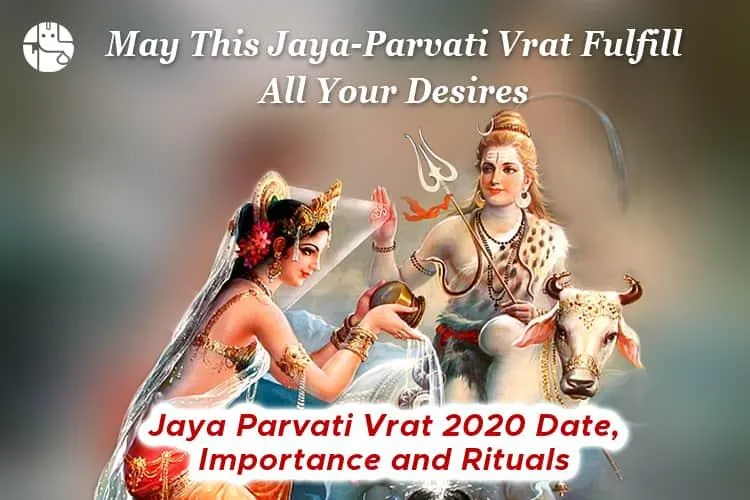
Jaya-Parvati Vrat is a five-day ritual observed in the month of Asadha. Most women from the Western part of India, especially Gujarat, celebrate it with great devotion and abstinence. It starts on the thirteenth day of the Shukla Paksha. It is believed that young girls observe this fast or Vrat to get wishful husbands while married women keep it for the prosperity and well-being of their husbands.
Shiv Parvati Vrat Dates 2026
Below are dates that mark the Jaya-Parvati Vrat in 2026
- Jayaparvati Vrat on Monday, July 27, 2026
- Jayaparvati Pradosh Puja Muhurat – 07:25 PM to 09:00 PM
- Jaya Parvati Vrat ends on Saturday, August 1, 2026
- Gauri Vrat on Saturday, July 25, 2026
- Trayodashi Tithi Begins – 02.00 PM on Jul 26, 2026
- Trayodashi Tithi Ends – 04:34 PM on Jul 27, 2026
Jaya Parvati Vrat Significance
The Jaya-Parvati ritual is performed for a happy conjugal life. Women observe this fast to get good husbands and assure love and happiness in their married life. It is believed that those who devotedly follow this quick are blessed with special favours from Lord Shiva and Goddess Parvati.Besides the happiness in marriage, women also observe this fast for the well-being, prosperity and overall progress of their family. Devotees who strictly adhere to the fast or Vrat rituals are bound to get blessed with desired favours from the deities.
Get divine assistance through astrology and brighten your prospects. Get Remedial Solutions for Personal Issues with the most effective guidance by our experts.
The Story Behind Jaya Parvati Vrat Festival
As per scriptures, the storyline of the Jaya-Parvati Vrat is associated with a Brahmin woman who observed this Vrat get rid of a curse on her husband. It is believed that the woman and her husband were ardent devotees of Lord Shiva and spared no pain in exhibiting their devotion for the deity.They were satisfied with all that they had, but being called a childless woman was unbearable for the woman. One fine day she succeeded in getting Lord Shiva’s propitiation and instantly asked for a child as a boon. Lord Shiva asked the couple to worship a Linga placed in a secluded place in the forest. Both followed the deity’s advice; however, unfortunately, the man got bit by a snake while he was on his way to collect flowers for the Puja.Helplessness made the woman turn towards Lord Shiva, who granted her wish of getting back her dead husband to life. Besides, they were immensely blessed with their most awaited want of having a son. In this way, the ritual of worshipping Lord Shiva and Goddess Parvati came into being. Women follow this ritual wholeheartedly to get bestowed with innumerable blessings from the deities.
Get a complete guide to your life by opting for our Janam Kundli Analysis and get personalised solutions with absolute accuracy.
Puja and Rituals On Jaya Parvati Vrat Festival
Goddess Jaya is the centre point of the Jaya-Parvati Vrat. It is believed that devotees who strictly adhere to these fast guidelines are blessed with favourable wishes from the Goddess. Abstaining from eating salty foods or salt in a diet for five days is a must for the fast. Avoiding eating vegetables and wheat items is also followed during this period.
Jaya Parvati Vrat Vidhi
- On the first day of the fast, Javara or wheat seeds are planted in a small earthen pot and are placed at the place of worship in one’s home. Then, the devotees perform Puja of this pot for five days continuously. The jar containing wheat seeds is watered every day at the time of Puja. Vermillion or Kanku is put on a necklace-like strand made of cotton wool which is known as Nagla. This strand is kept around the edges of the earthen pot.
- On the night before the last day of the fast, women observe Jaya Parvati Vrat and stay awake all night singing hymns and bhajans.
- They recite Aartis in praise of Lord Shiva and Goddess Parvati. This night vigil is carried forward till the next day, which is celebrated as Gauri Tritiya. This long night vigil is called Jaya-Parvati Jagran.
- On the very next day of Jagran, which is the last day of the fast, the wheat seeds in the earthen pot grow into wheatgrass and are immersed in a nearby river, pond or any water body. Along with a puja, several rituals are observed after which women break their fast by consuming a wholesome meal consisting of cereals, vegetables and salt.
Are You Facing any Problems in Life? So, this is the right time to Connect with our Astrologer on Call and remove your obstacles. First Call Free!
To Get Your Personalized Solutions, Talk To An Astrologer Now & Get First Consultation Free!
With Ganesha’s Grace,
FAQs
What is the significance of the Jaya-Parvati Vrat?
Jaya-Parvati Vrat is a five-day ritual observed in the month of Asadha. It is primarily celebrated by women in Western India, especially in Gujarat, for the prosperity and well-being of their husbands and family. It is believed to bring happiness in marriage and blessings from Lord Shiva and Goddess Parvati.
When are the Shiv Parvati Vrat dates in 2026?
The Shiv Parvati Vrat in 2026 begins on the thirteenth day of the Shukla Paksha in the month of Asadha. Specific dates can be checked in detailed Hindu calendars or religious texts.
What are the rituals associated with Jaya-Parvati Vrat?
During Jaya-Parvati Vrat, women abstain from eating salty foods, vegetables, and wheat items. The fast is observed with great devotion, and rituals include worshipping Lord Shiva and Goddess Parvati, often involving a Linga.
Who observes the Jaya-Parvati Vrat and why?
The Jaya-Parvati Vrat is observed by women, primarily in Gujarat. Young girls observe it to get wishful husbands, while married women do so for the prosperity and well-being of their husbands and family.
What is the story behind the Jaya-Parvati Vrat?
The Jaya-Parvati Vrat is associated with a Brahmin woman who observed the fast to rid her husband of a curse. Her devotion to Lord Shiva led to her husband’s revival and the blessing of a son, establishing the ritual’s significance.